


Content may contain affiliate links. When you shop the links, I receive a small commission at no cost to you. Thank you for supporting my small business.
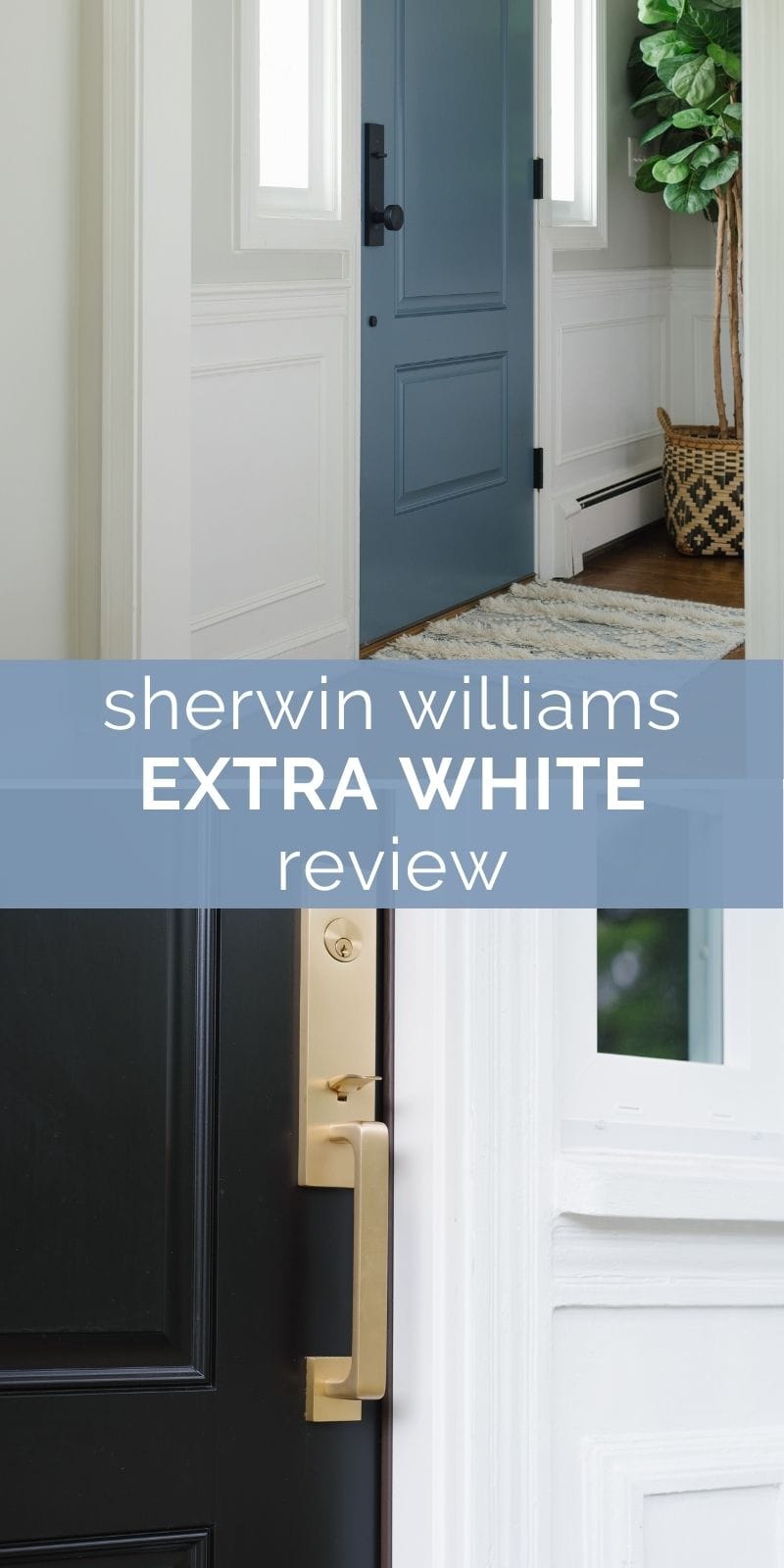
Not all whites are created equal—and Extra White proves that subtle undertones can make or break your space.
If you’re hunting for a crisp, clean white that feels modern and fresh—without going icy or clinical—Sherwin Williams Extra White (SW 7006) might be just what you’re looking for. This bright white is one of Sherwin Williams’ most popular trim and cabinet colors, but it also has surprising versatility as a wall or even exterior shade.
In this review, I’ll break down the undertones, real-life applications, best trim pairings, and how it compares to similar shades like Pure White, Alabaster, and Chantilly Lace.
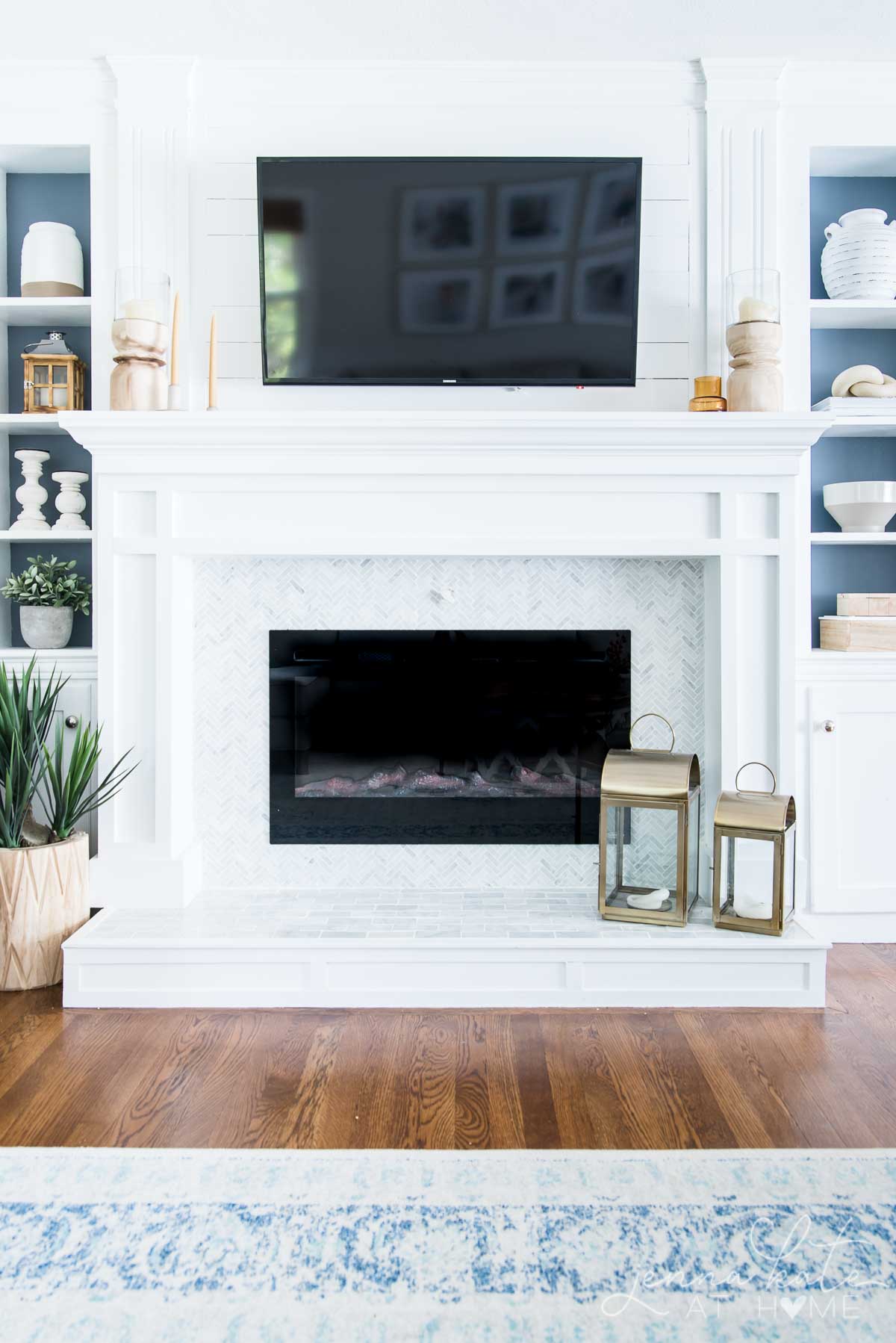
What Color Is Sherwin Williams Extra White?
Despite its name, Extra White isn’t the brightest white in Sherwin Williams’ lineup (that title goes to High Reflective White). However, with an LRV of 86, it’s still incredibly bright—and one of their cleanest whites with a slightly cool undertone.
It’s a go-to for trim, cabinetry, and ceilings, especially when paired with cool or neutral wall colors.
LRV of Extra White: Why It Matters
Extra White’s Light Reflectance Value (LRV) is 86. That puts it firmly in the high-reflectance category, meaning it will bounce a lot of light around a room. But it also has a tiny bit of depth, which helps it avoid looking sterile like some ultra-bright whites.
In a nutshell:
- LRV 86 = bright, reflective white
- Not stark, but noticeably cooler than creamy whites
- Looks crisp and clean without feeling clinical
If you want to understand how LRV impacts color choices, I have a full guide explaining everything you need to know about LRV.
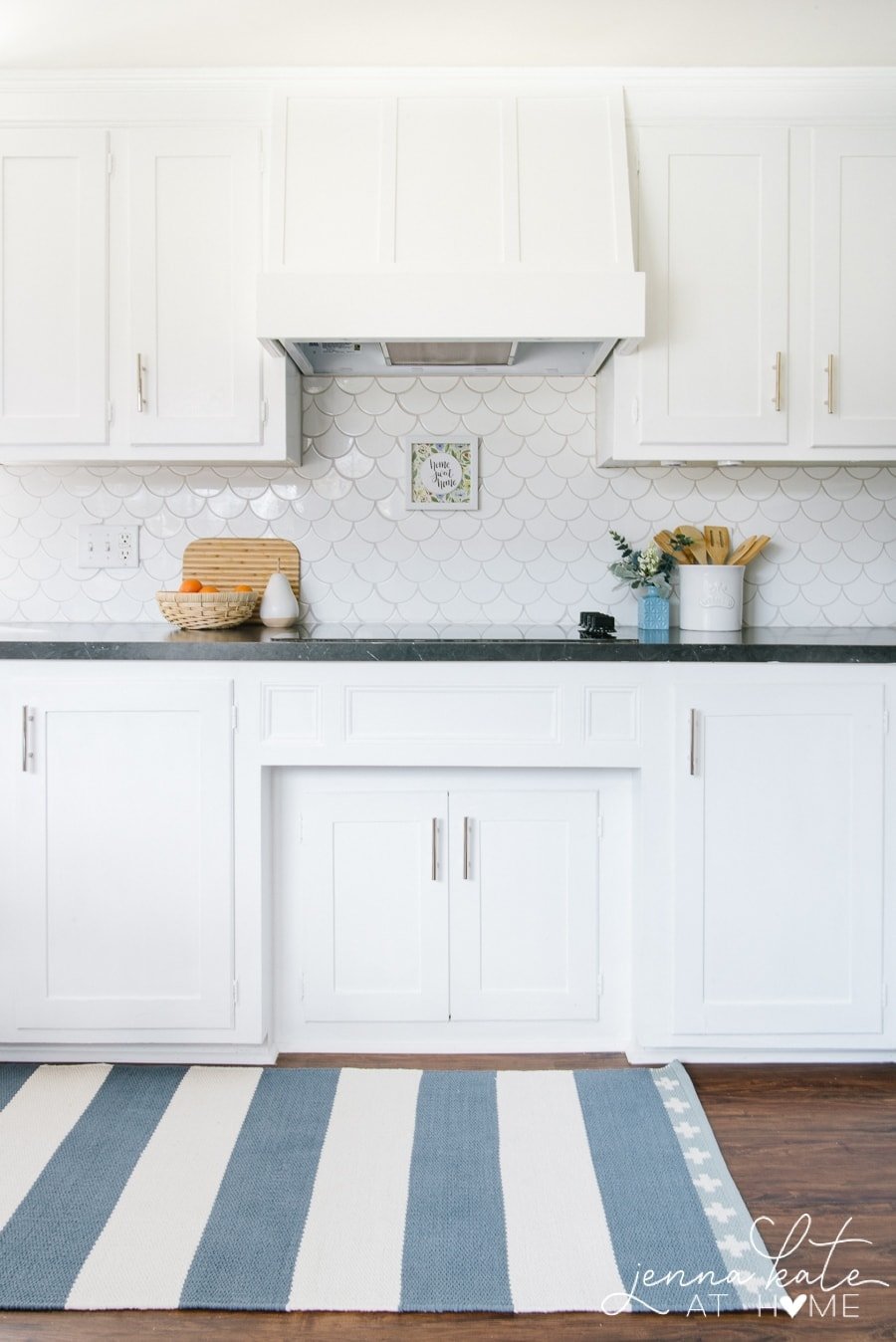
Extra White Undertones: What You Need to Know
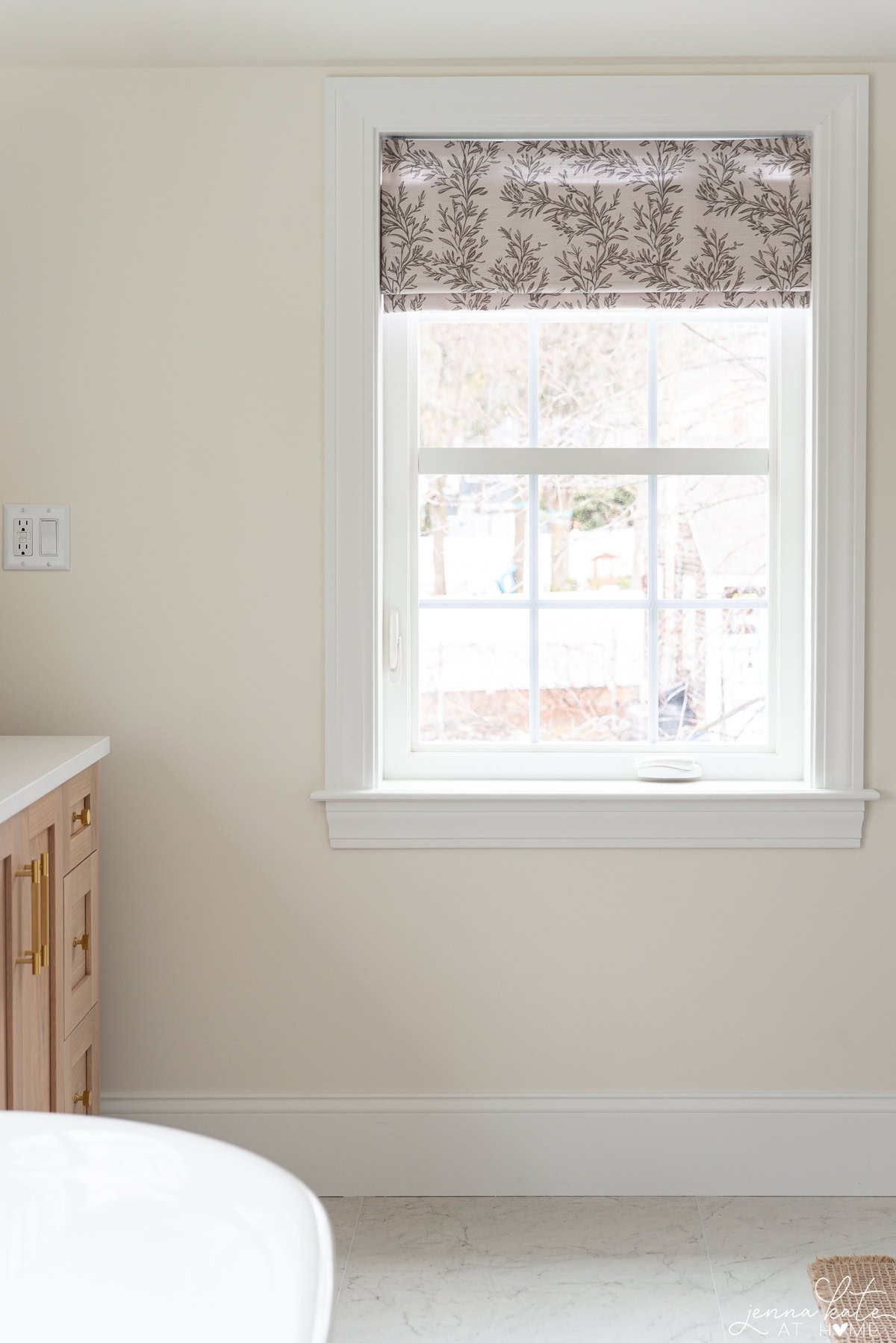
Extra White has a subtle blue-gray undertone, which makes it feel cool but not cold. In south-facing or warm-lit rooms, this undertone is barely noticeable. In north-facing or low-light rooms, it may read a little gray or even slightly blue—especially when paired with cooler furniture or finishes.
Important note: Extra White can vary slightly depending on paint formula.
- Wall paints: Slightly cooler finish due to the base formula
- Trim/cabinet paints: Slight warmth can appear from the yellow tint in the base
This subtle shift is one reason I recommend using the same finish on walls and trim (or at least sampling both finishes before committing).
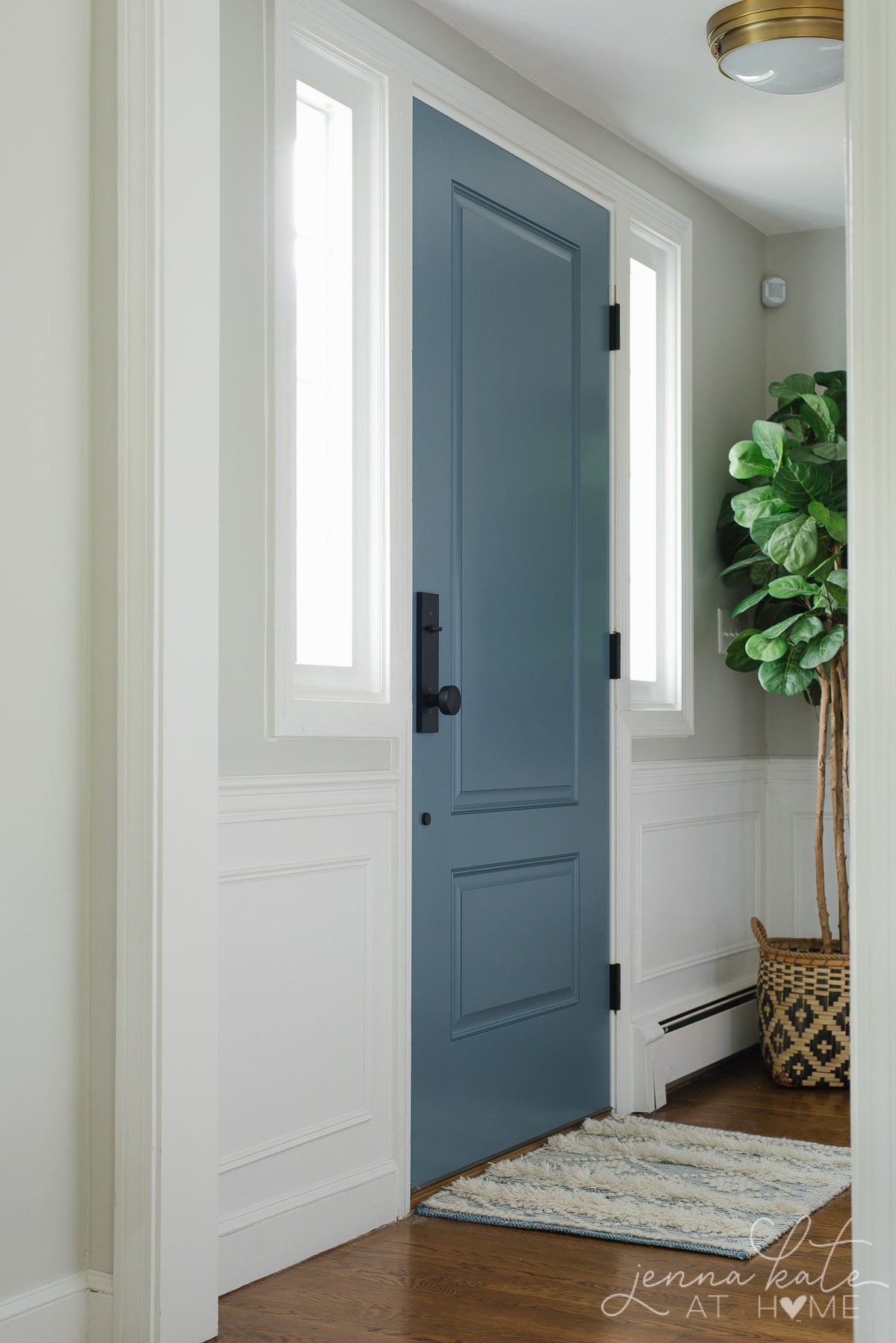
Where Extra White Works Best
Extra White is one of the most versatile whites—especially for cool-toned palettes or modern spaces. Use it for:
- Exteriors: Works well with cool-toned siding or brick and factory-finished whites
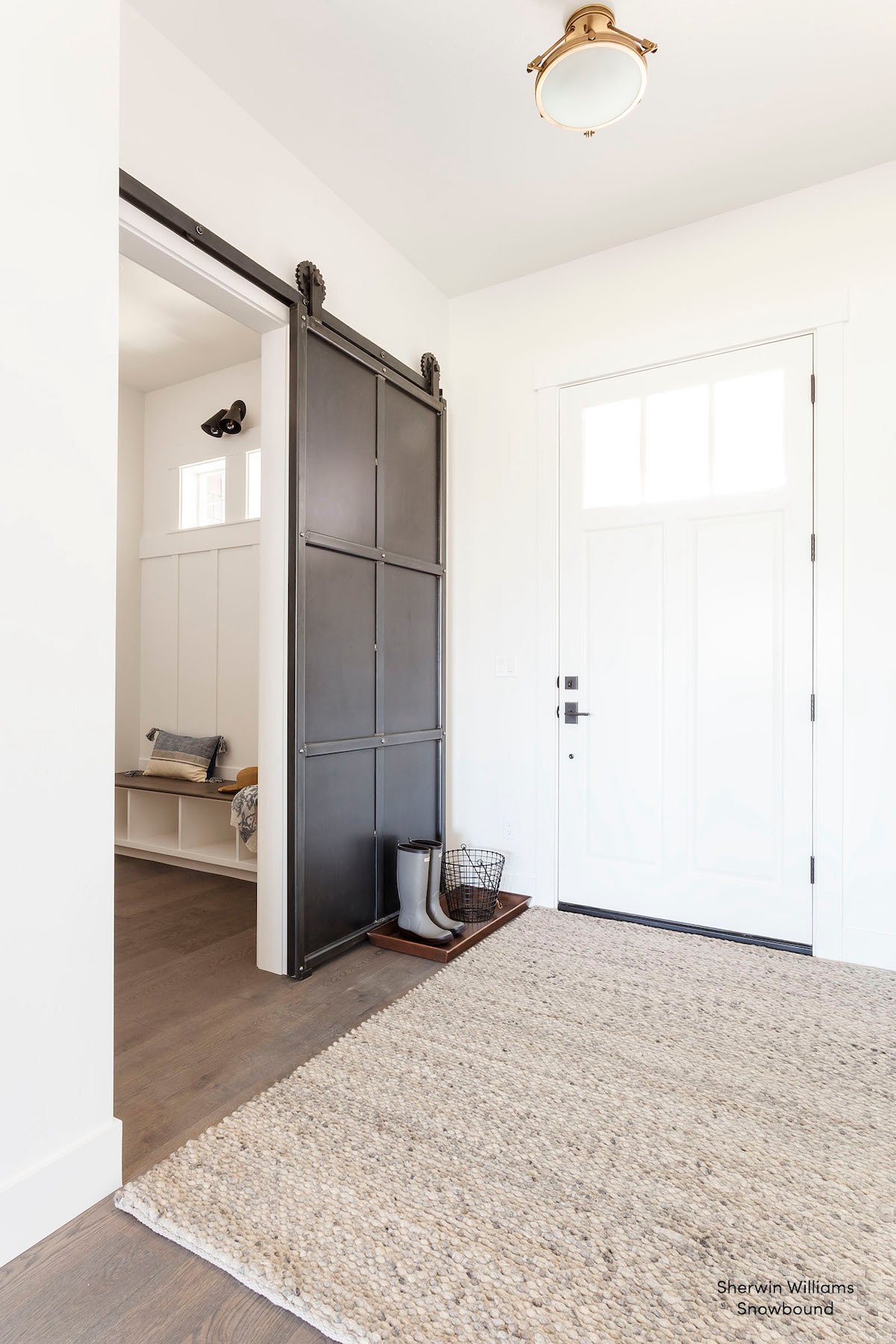
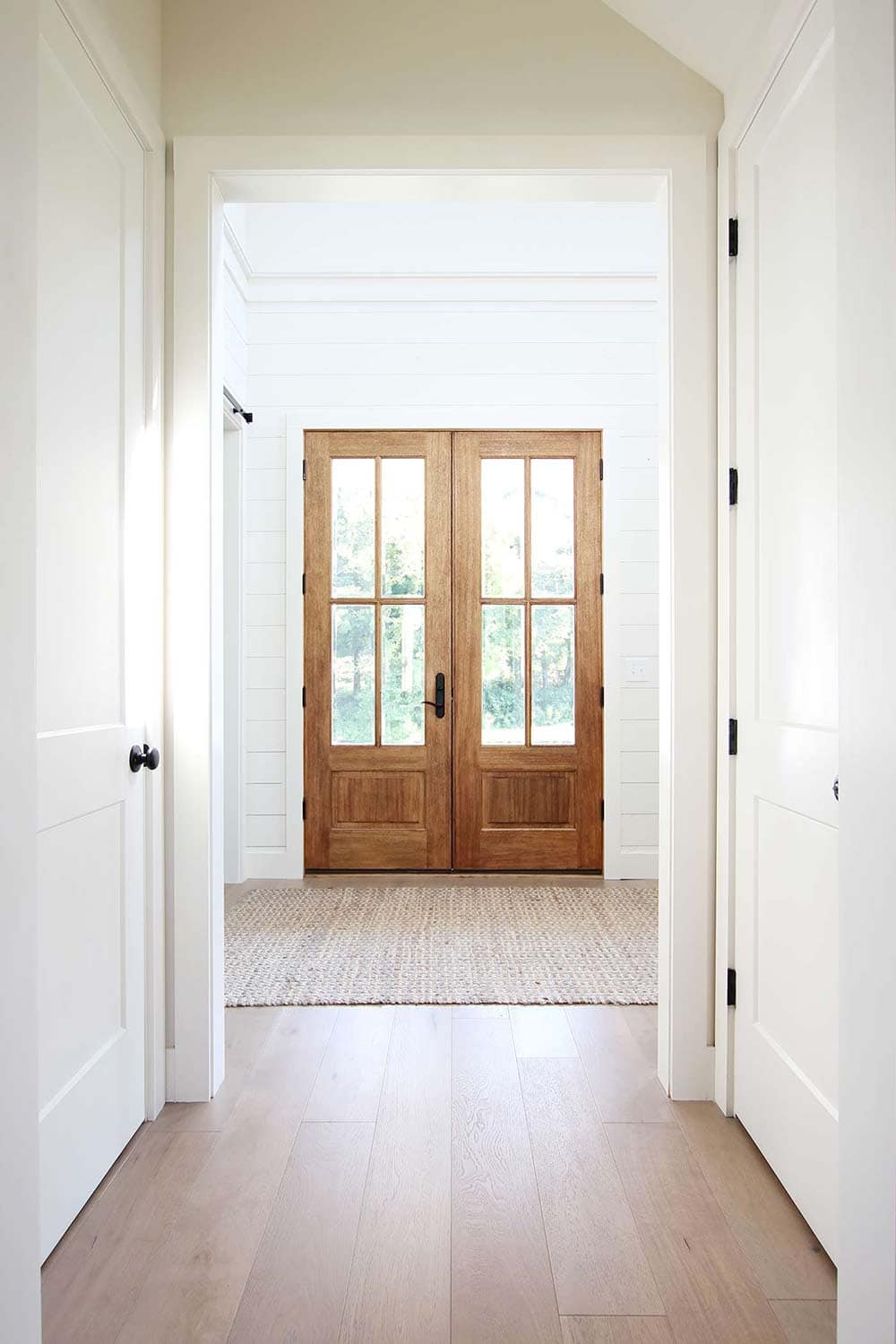
- Trim and doors: Clean and crisp
- Ceilings: Especially effective in rooms with gray or blue walls
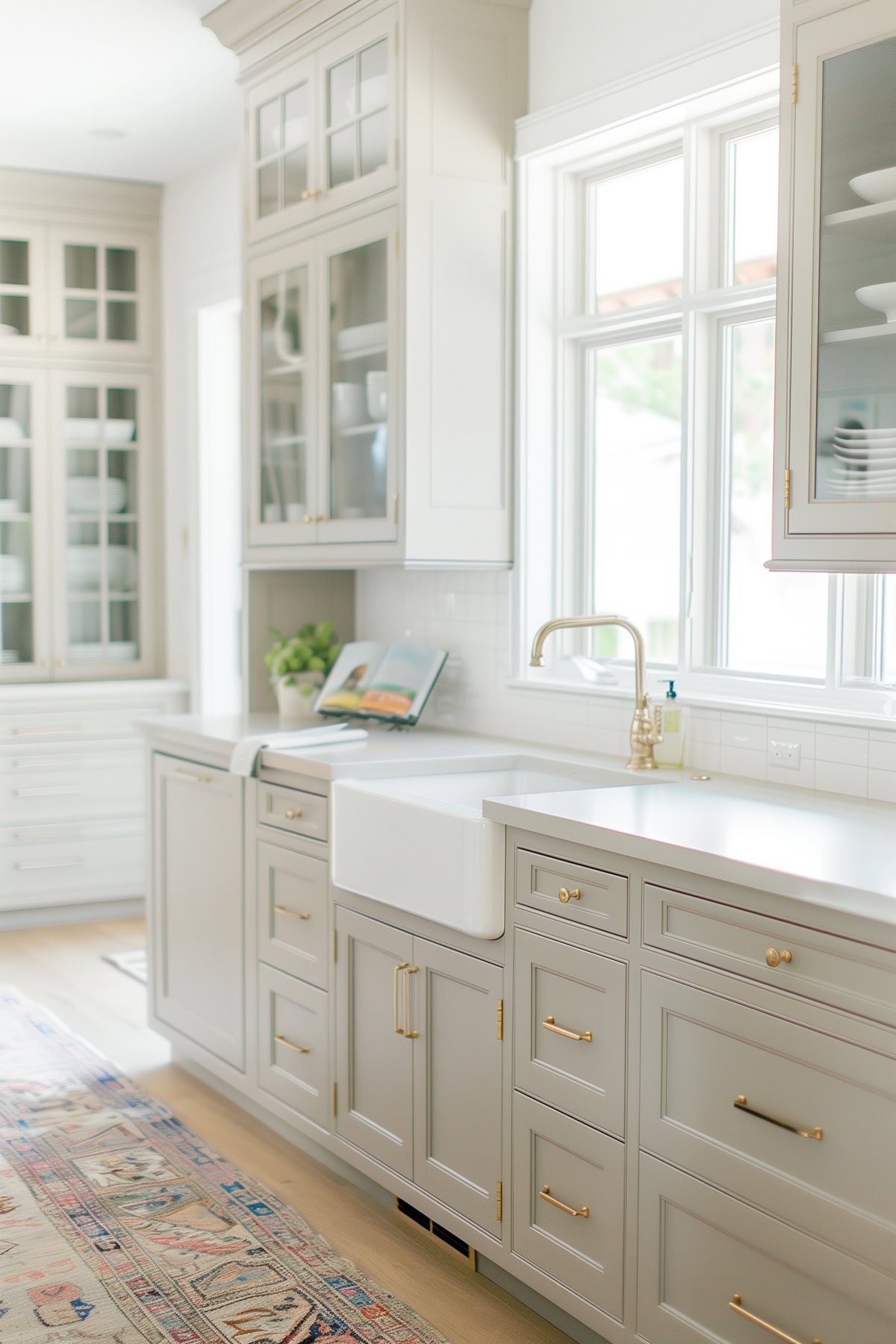
- Cabinetry: A sleek, high-contrast option in modern or transitional kitchens
- Walls: Best in bright spaces or homes with predominantly cool finishes
- Closets and pantries: Keeps smaller spaces feeling bright, open, and clean—even with limited or artificial lighting.
Where It Might Not Be the Best Fit
- If your home has a lot of warm wood tones or beige walls, Extra White may look too stark or blue by contrast.
- Avoid pairing it with warm whites like Alabaster, White Dove, or Swiss Coffee—they’ll highlight its coolness.
- In very dark, north-facing rooms, it might look dingy or gray.
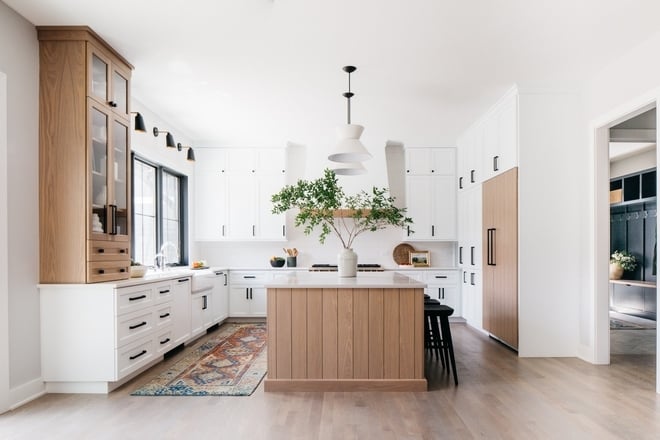
Best Trim and Ceiling Pairings for Extra White
- Same Color, Different Sheen: Use Extra White on both walls and trim but in different finishes. I recommend eggshell or matte for walls and satin or semi-gloss for trim. This gives subtle contrast without undertone clashing.
- High Reflective White: If you want even brighter trim, this ultra-white shade offers a crisp contrast.
- Pure White: A slightly warmer alternative that blends more easily with both warm and cool palettes.
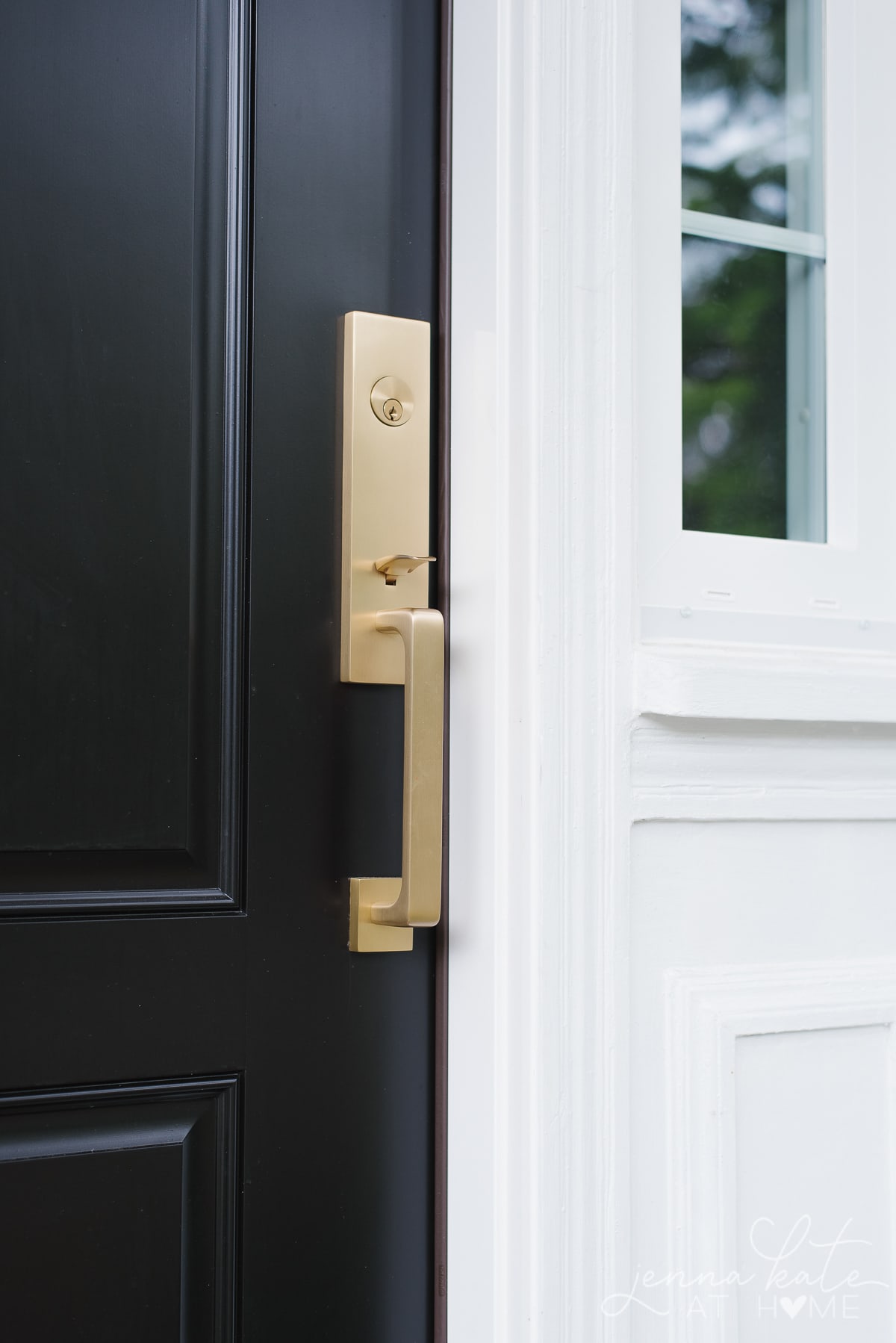
Extra White vs. Other Popular Whites
Sherwin Williams Extra White vs. Pure White
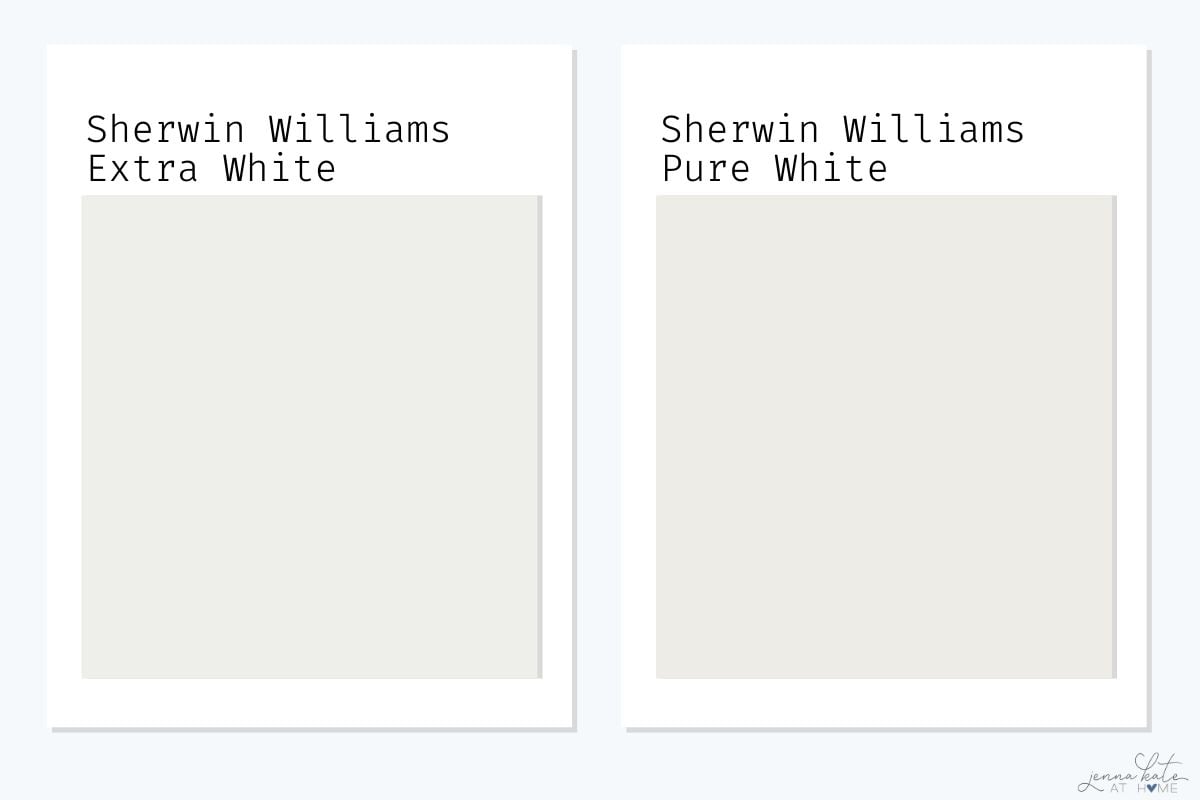
Pure White (SW 7005) is slightly warmer than Extra White. It has a touch of yellow and gray, giving it a softer, more versatile feel. Extra White is crisper and cooler, and may show more blue or gray undertones in certain lighting. Pure White is a better choice if you’re working with mixed warm and cool tones.
Verdict: Pure White is softer and more versatile; Extra White is cooler and crisper, better for modern palettes.
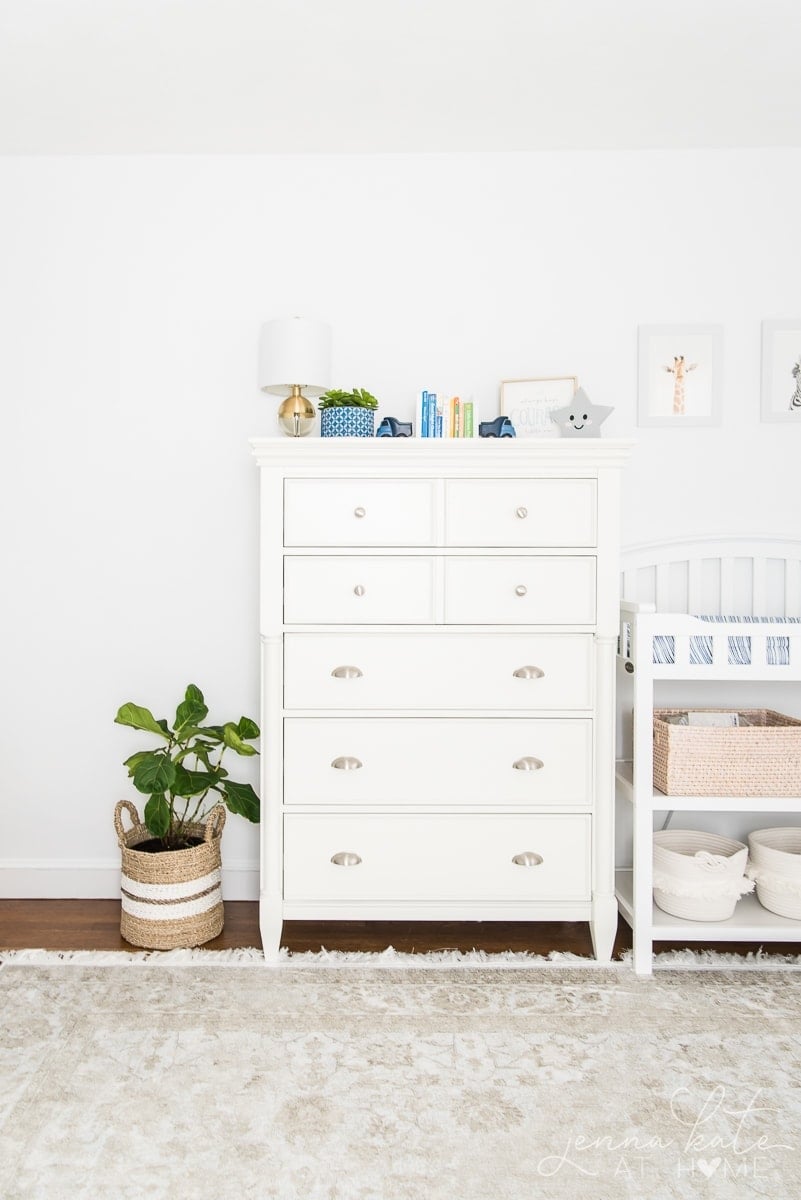
SW Extra White vs SW Alabaster
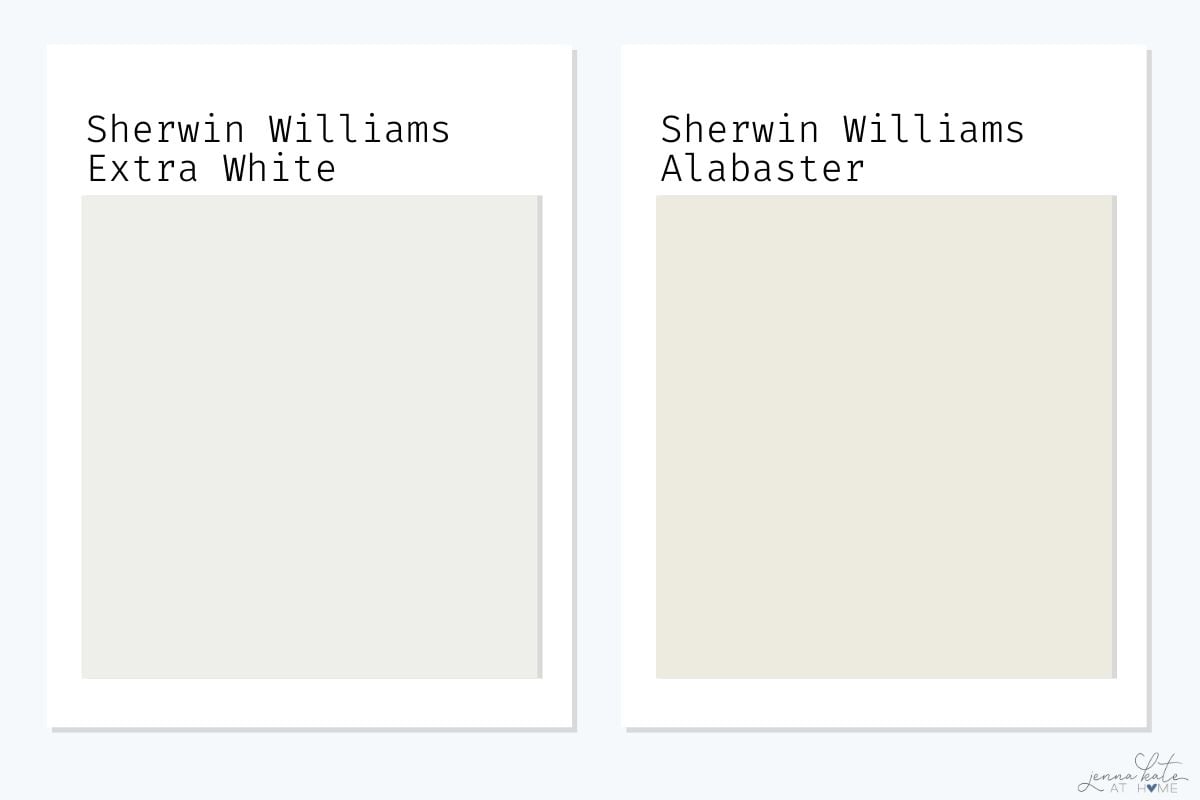
Alabaster (SW 7008) is a creamy, warm white with a soft beige undertone. Compared to the cool, crisp Extra White, Alabaster feels much cozier and is better suited for traditional or warm-toned spaces. These two are not good pairings for trim and walls unless strong contrast is desired.
Verdict: Alabaster is warmer and creamier; better suited for traditional or cozy spaces. Extra White feels brighter and more modern.
Sherwin Williams Extra White vs. High Reflective White
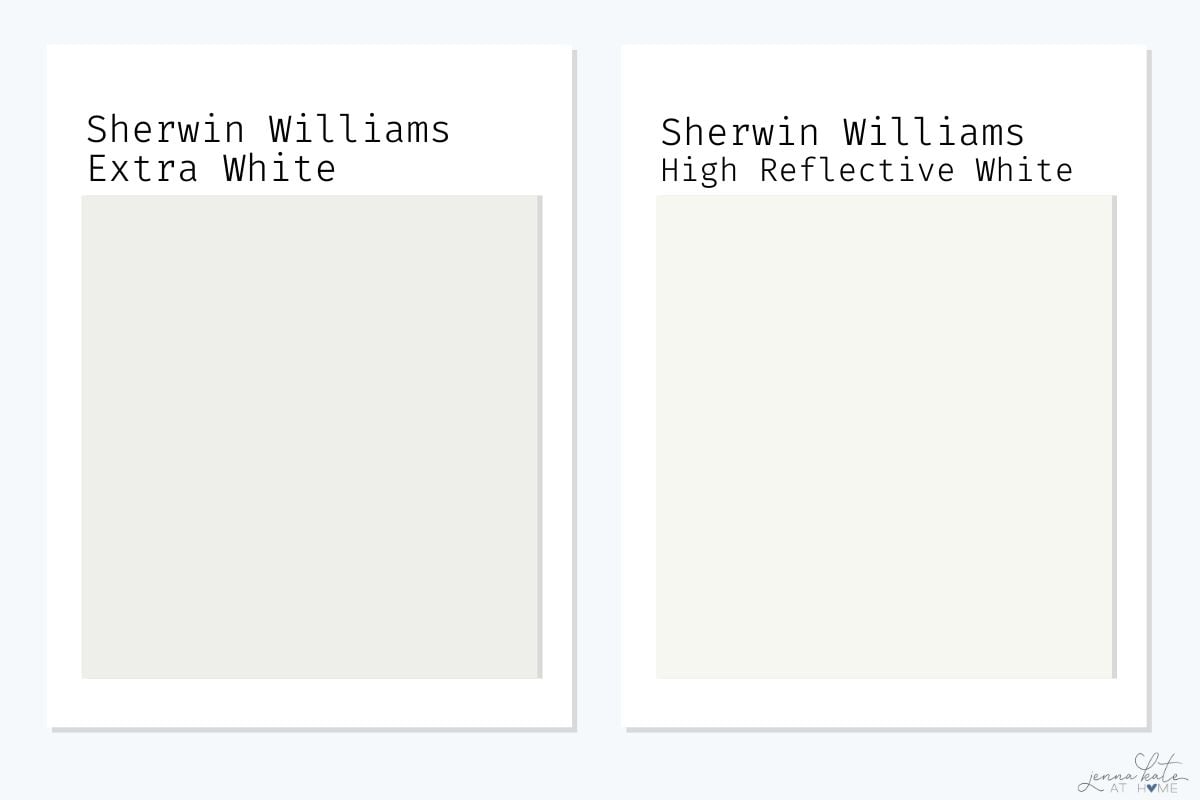
High Reflective White (SW 7757) is Sherwin Williams’ brightest white, with an LRV of 93 compared to Extra White’s 86. It’s more neutral with fewer undertones, while Extra White can lean blue in cooler lighting. High Reflective White is best for ultra-modern, high-contrast looks.
Verdict: High Reflective White is the brightest and most neutral white SW offers; Extra White is a touch softer and slightly cooler.
Sherwin Williams Extra White vs. Benjamin Moore Chantilly Lace
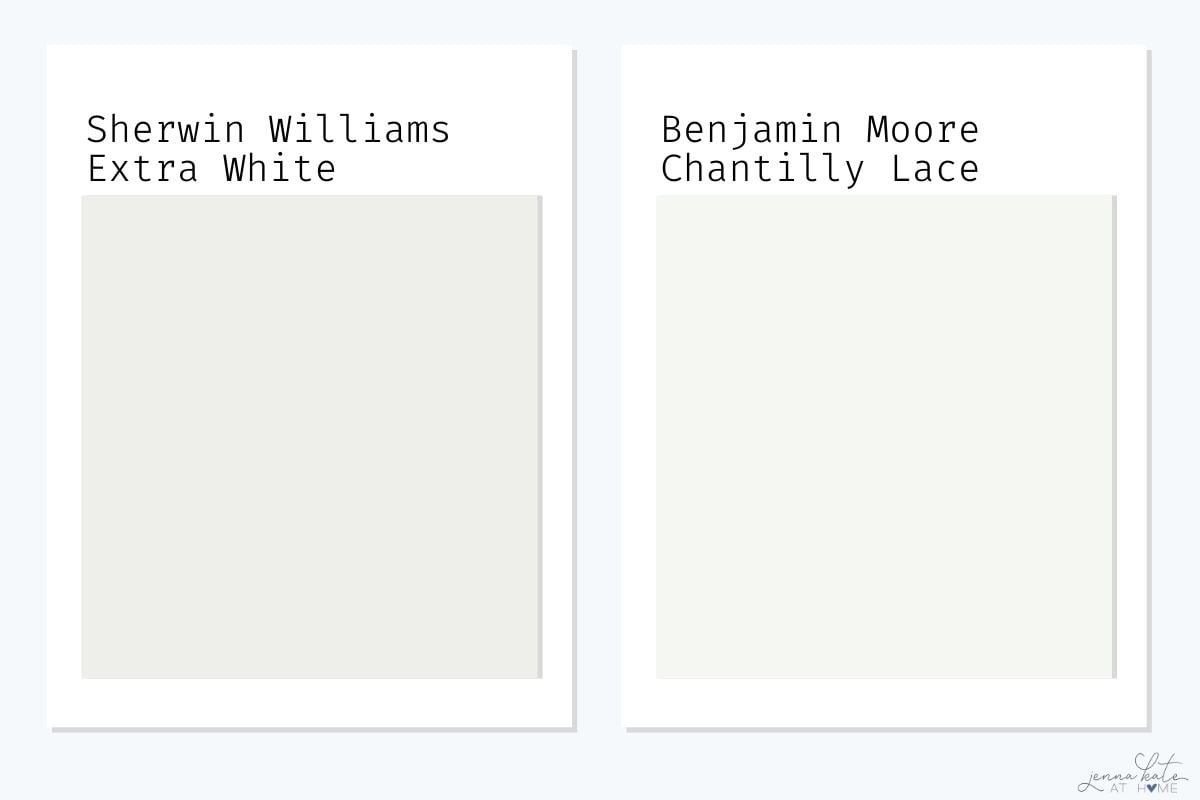
Chantilly Lace (BM OC-65) is a clean, neutral white that’s slightly brighter than Extra White. While both can work in modern spaces, Chantilly Lace is more flexible across lighting conditions due to its near-zero undertones, making it a safer choice if you don’t want the risk of blue flashing.
Verdict: Chantilly Lace is more neutral and flexible across lighting; Extra White may show cool undertones in low light.
Sherwin Williams Extra White vs. Benjamin Moore Decorator’s White
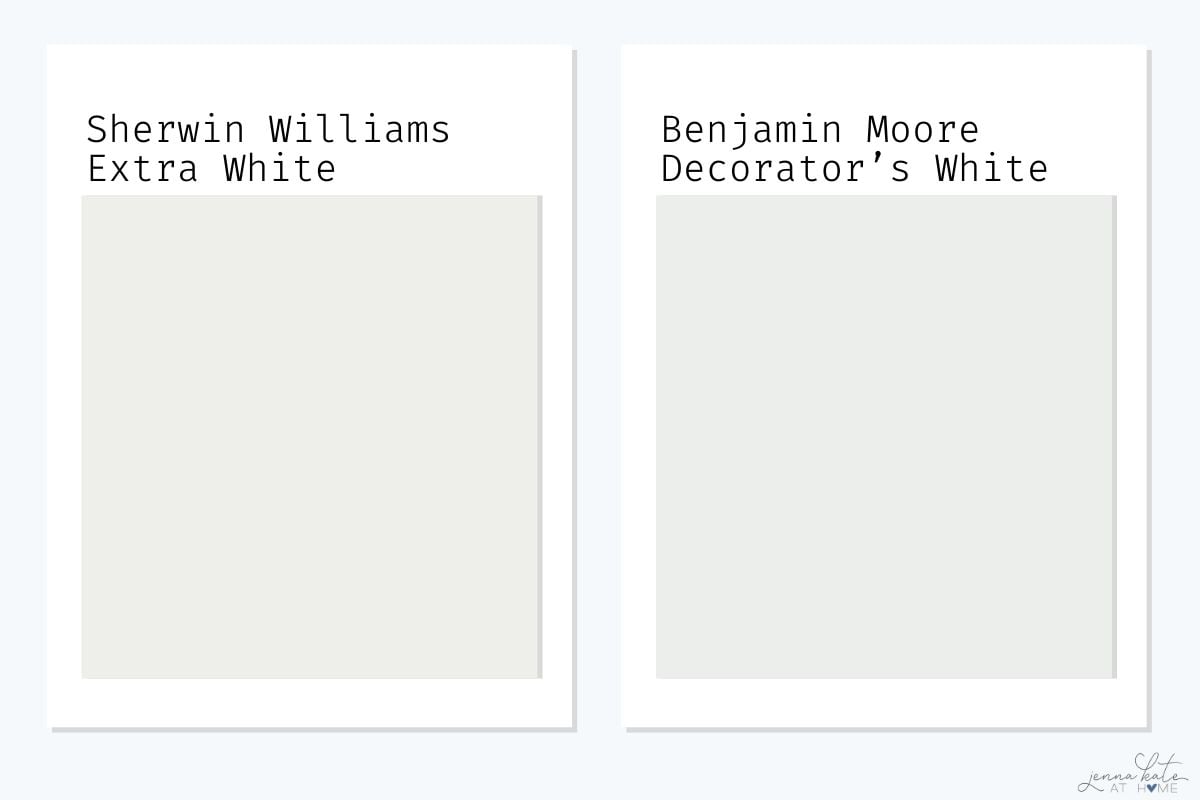
Decorator’s White (BM OC-149) has noticeable cool violet-gray undertones and an LRV of 82.64, making it darker and moodier than Extra White. It’s a nice alternative if you want a cooler white with a bit more depth and softness.
Verdict: Decorator’s White is darker and moodier with stronger gray-violet undertones; Extra White is brighter and cleaner.
Coordinating Colors for Extra White
Pair Extra White with cool, crisp shades for a fresh and cohesive palette:
- Natural woods or light oak – to warm it up without clashing
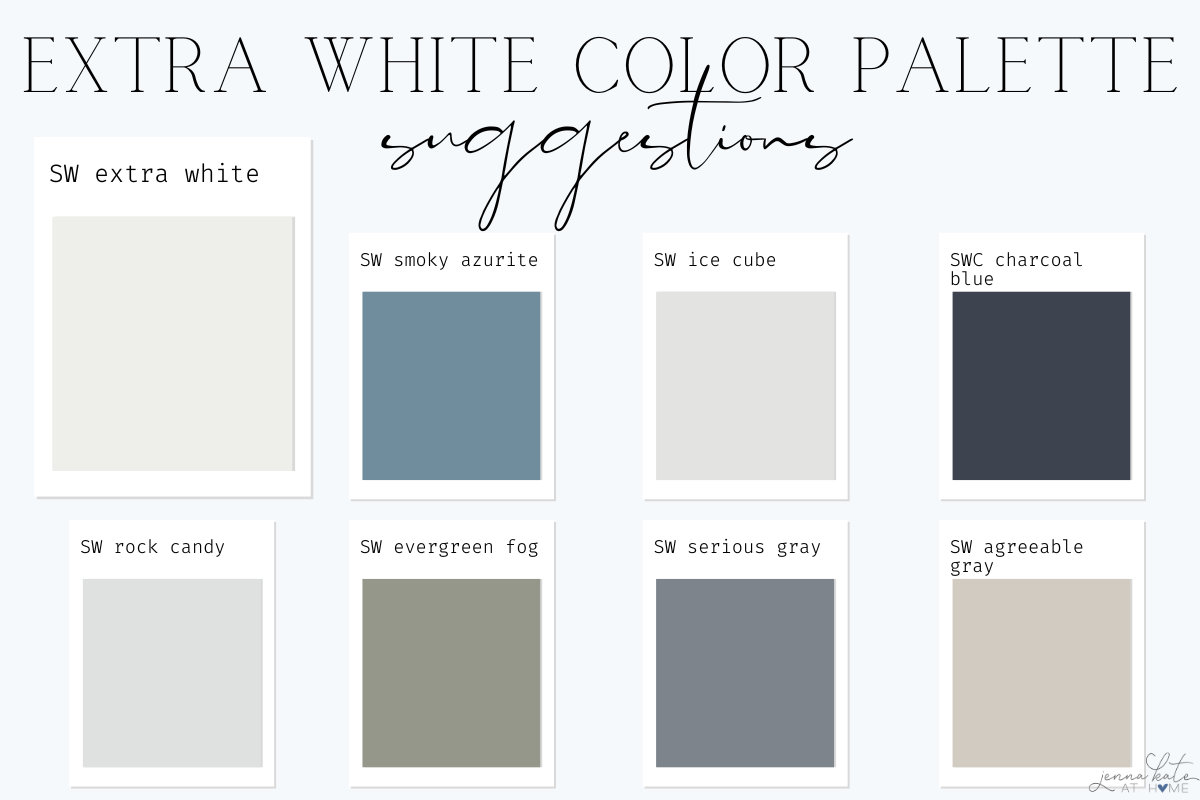
- SW Smoky Azurite – deep, moody blue
- SW Ice Cube
- SW Charcoal Blue
- SW Rock Candy – icy gray-blue
- SW Passive – soft cool gray
- SW Sea Salt – green-gray with coastal vibes
- SW Iron Ore – dramatic charcoal contrast
Frequently Asked Questions
Not in bright or south-facing rooms. In darker rooms, it may feel too cool or flat unless you balance it with warm furnishings.
Yes! Just use different sheens—matte or eggshell for walls, satin or semi-gloss for trim—for subtle dimension.
Rarely. It’s one of the least likely to go yellow, even in warm lighting.
Extra White is cooler and cleaner. Pure White is slightly warmer and softer.
Absolutely. It reflects a lot of light and gives that seamless “barely there” ceiling look.
Yes, especially paired with black shutters or navy doors. Just keep in mind it can look cooler outdoors.
Don’t Forget…
Don’t forget – no matter what you’ve read or photos you’ve seen online, it’s really important to sample paint colors in your home before committing!
Samplize provides real paint samples that are easy to move around your home, and cheaper than buying a gazillion paint pots! It’s the only way I buy paint samples.
Final Thoughts
Sherwin Williams Extra White is a crisp, clean, cool white that works beautifully in modern and coastal homes—or any space with a cool color palette. While not the brightest white in the lineup, it delivers a striking contrast against mid-tone colors and remains a favorite for trim, cabinets, and beyond.
Hi, I am using extra white as well for trim and doors. What sheen do you use on your interior doors? thanks, Diane
Hi! Always at least one sheen up. So if walls are matte or eggshell then trim and doors would be satin or semi gloss.
I’m having Classic Calacatta Quartz installed in my kitchen and I wanted a white paint color that would work for walls, cabinets, ceiling, and trim – is pure white or extra white too light for the quartz? I have had designers recommend alabaster but it seems to wash out the quartz to me and looks a tad yellow.
Alabaster could work depending on the light in your kitchen. Pure White is probably a safer choice, but get samples and see how it looks!
Hi Jenna I was wondering if extra white is a good choice for an exterior color we are purchasing a 1930’s bungalow and I want the outside paint to be a bright crisp clean white for entire body and trim will have a new black roof and natural wood tone shutters the interior is also going white we have chosen Pure White for walls and trim just unsure of the exterior color white is so hard for me lol tried and failed before so just trying to avoid another creamy yellow undertone white home thanks
Search for Chrissy Marie Blog on IG, her exterior was painted Extra White and it was beautiful! It will never look creamy thats for sure
I didn’t see this mentioned but we are about to have our interior walls painted and the trim in currently Extra White and I was wanting to paint our walls Pure White. Could I leave the Extra White trim or should I paint trim Pure White also? I can’t find the answer to this anywhere, so any help would be so appreciated!
You *probably* won’t notice too much of a difference since the sheens will be different anyway. To be safe, test a swatch of pure white close to where the wall meets the trim to see how it looks in the light in your home.
Hi, this articles addresses the exact two SW whites I’ve been offered. (Choosing one of these over Swiss Coffee). I am unable to get into the home to test it. The main living space room will face East, the BR will face South. The office North.. I love a clean, crisp, bright white but want to avoid a chalky white. My favorite white would look soft and fluffy. haha How do I choose between Pure White and Extra White…….? Will Extra be too stark and harsh? I got some chips from SW but still hard to tell. Thanks for the article!
pure white is a safer choice as extra white will look dull in northern light. Paint chips are not an accurate representation, you’ll want to order samples from Samplize or test the paint in the space. Either way, pure white is a safer option.
Can I paint the walls, trim, ceilings & kitchen cabinets
SW Extra White ?
Absolutely!Flat for ceilings, satin or semi gloss for trim/cabinets and then matte or eggshell on walls.
Yes, extra white semi gloss for cabinets and trim, flat finish for ceilings.
Hi Linda! I am doing the same but tricorn black on the bottom cabinets. I would love to hear how it worked out.
Anne