


Content may contain affiliate links. When you shop the links, I receive a small commission at no cost to you. Thank you for supporting my small business.
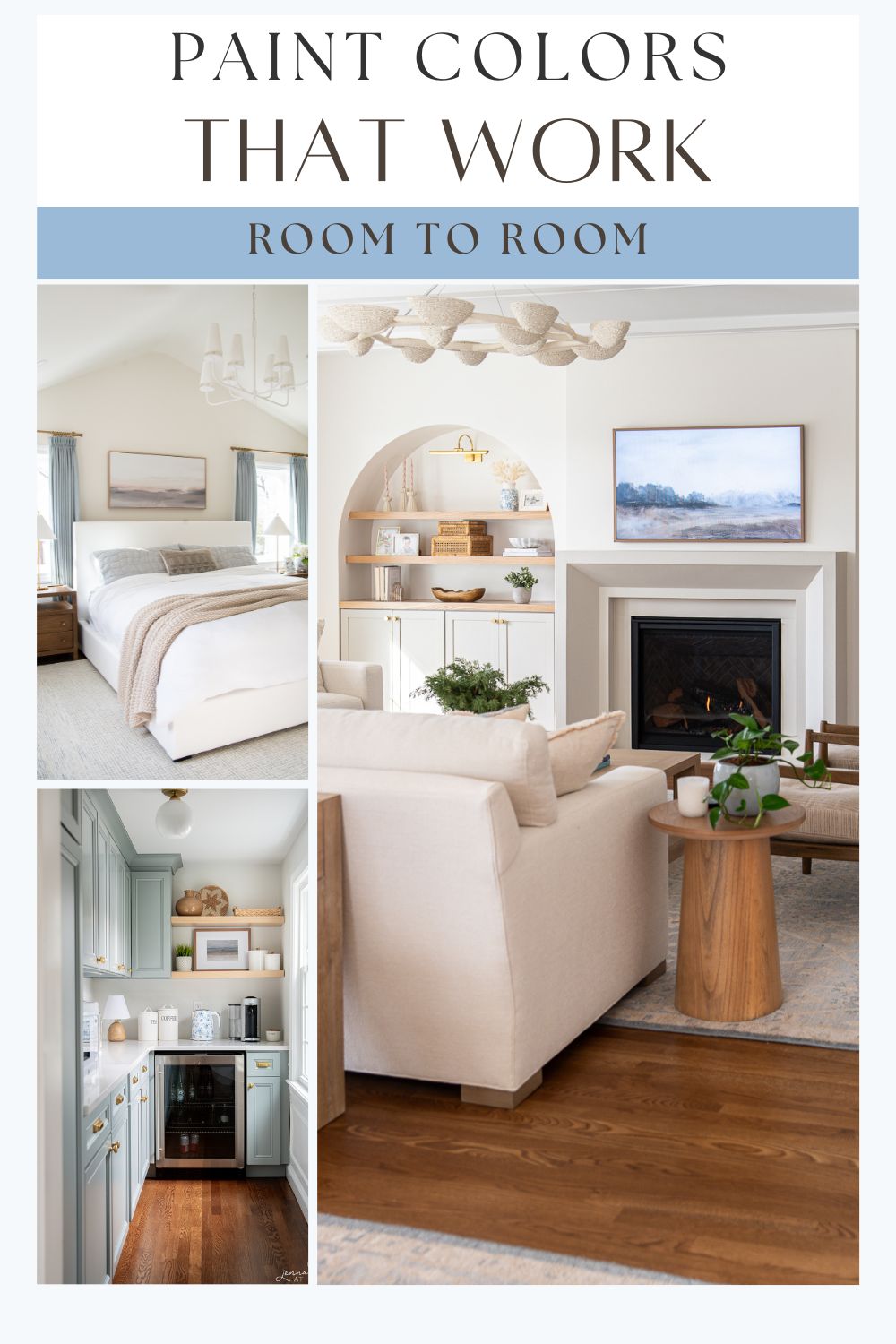
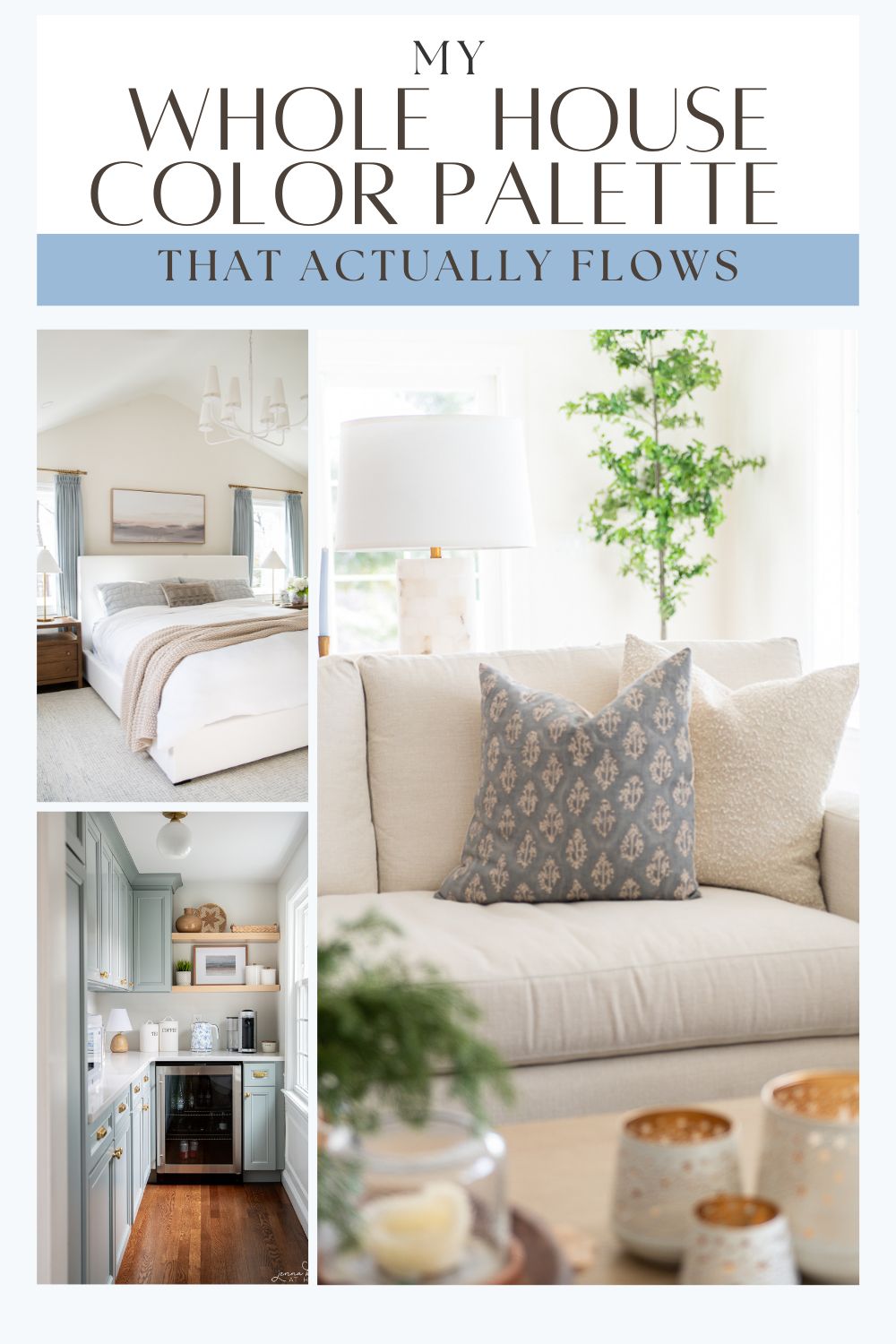

Choosing paint colors for your home can feel overwhelming—especially when you’re trying to make everything feel cohesive without painting every room the exact same color. Whether you’re building from scratch, remodeling a single space, or just tired of rooms that feel disconnected, a well-planned whole house color palette can completely change the look and feel of your home.
In this guide, I’ll walk you through exactly how to build a color scheme that flows room to room, looks polished (but not matchy-matchy), and actually works with what you already have.
The 6-Color Formula for a Cohesive Home
Most professionally designed homes follow a 5–6 color rule. That doesn’t mean only using six colors total—it means choosing six intentional, repeating tones that create consistency throughout your space.
| Role | Description + Example |
|---|---|
| 1 Main Neutral | Wall color used throughout (e.g. Alabaster) |
| 1 Secondary Neutral | Darker tone for cabinetry or built-ins |
| 1 White or Cream | For trim, ceilings, cabinetry (e.g. Pure White) |
| 1 Accent Color | For accessories, pillows, rugs, art |
| 1–2 Supporting Colors | Muted tones that add variety and flow |
TIP: Repetition is what makes this work. Your accent color in one room can become the wall color in another.
Start With What You Have
Before picking any paint colors, take a look at the fixed elements in your home:
- What color are your floors—are they warm-toned oak or cool-toned gray?
- Do your kitchen counters or bathroom tile have pink, yellow, green, or blue undertones?
- Are your cabinets staying put?
Your goal is to complement these undertones—not fight them. Even the most beautiful paint color will look off if it clashes with your finishes.
Tip: Hold your paint swatches right next to your floor or tile to see if they pull out any unexpected undertones
My Whole House Color Palette
| Area | Paint Color | Type |
|---|---|---|
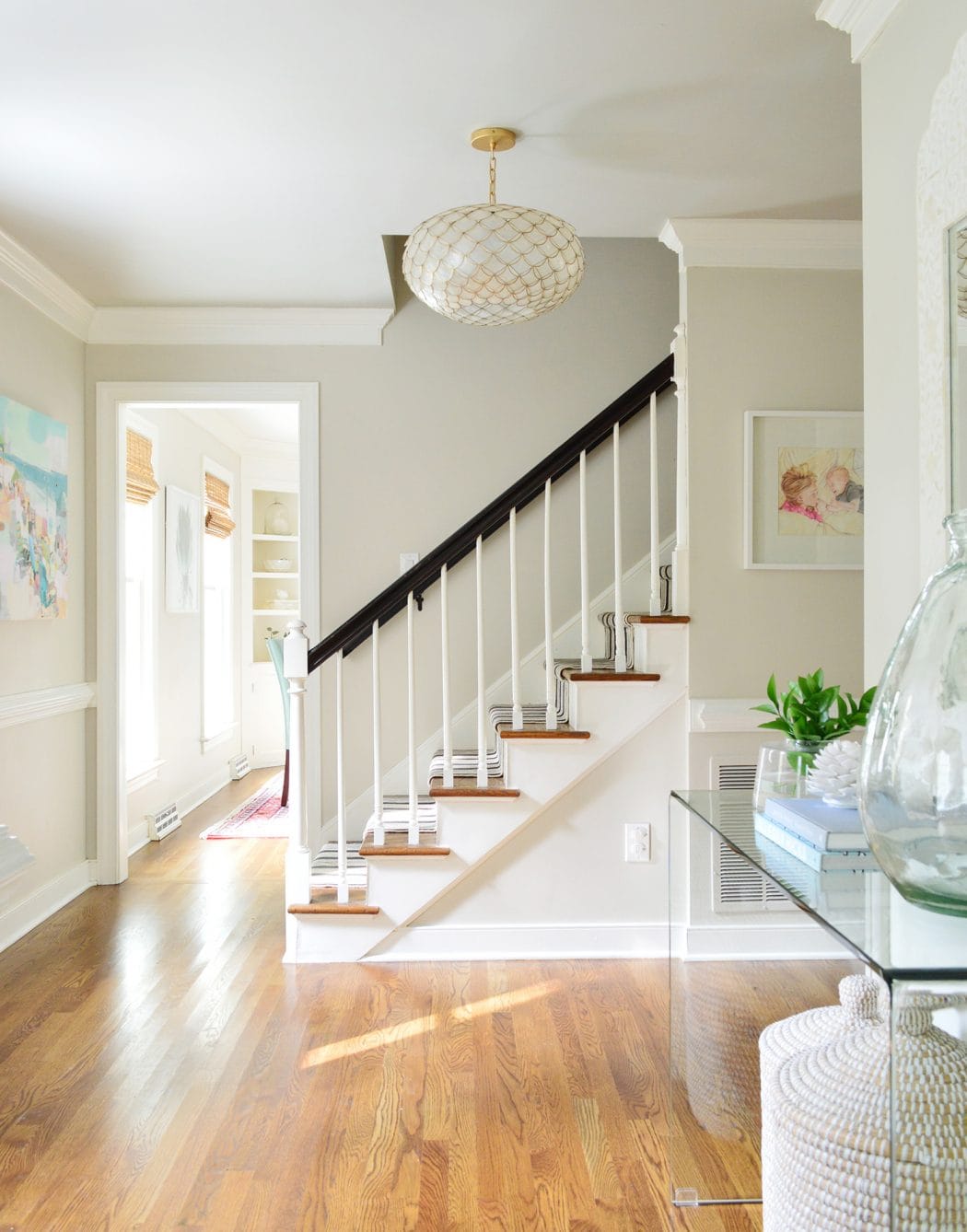
| Kitchen, Dining, Living | SW Repose Gray (50% lighter) | Main Neutral |
| Family Room | BM White Dove | Main Neutral |
| Basement TV Room | SW Drift of Mist | Main Neutral |
| Upstairs Bedrooms | BM Swiss Coffee | Main Neutral |
| Trim & Ceilings | SW Pure White | White/Cream |
| Kitchen Island & Pantry Cabinets | BM Boothbay Gray | Secondary Neutral |
| Front Door Interior | BM Britannia Blue | Supporting Color |
| Throughout Decor | Blue (all shades) + Brass tones | Supporting Accents |
These colors work together because they’re all light and airy, with a warm undertone and a touch of softness—nothing too stark or too cool. Even though Swiss Coffee doesn’t have the gray undertone found in the others, its placement upstairs adds warmth and keeps the palette feeling layered and natural.
You don’t need to use one single paint color to create a cohesive whole house palette—you just need colors that speak the same tonal language.
Real Home Example: How My Whole House Palette Comes to Life
Here’s a peek into how this palette actually plays out room by room:
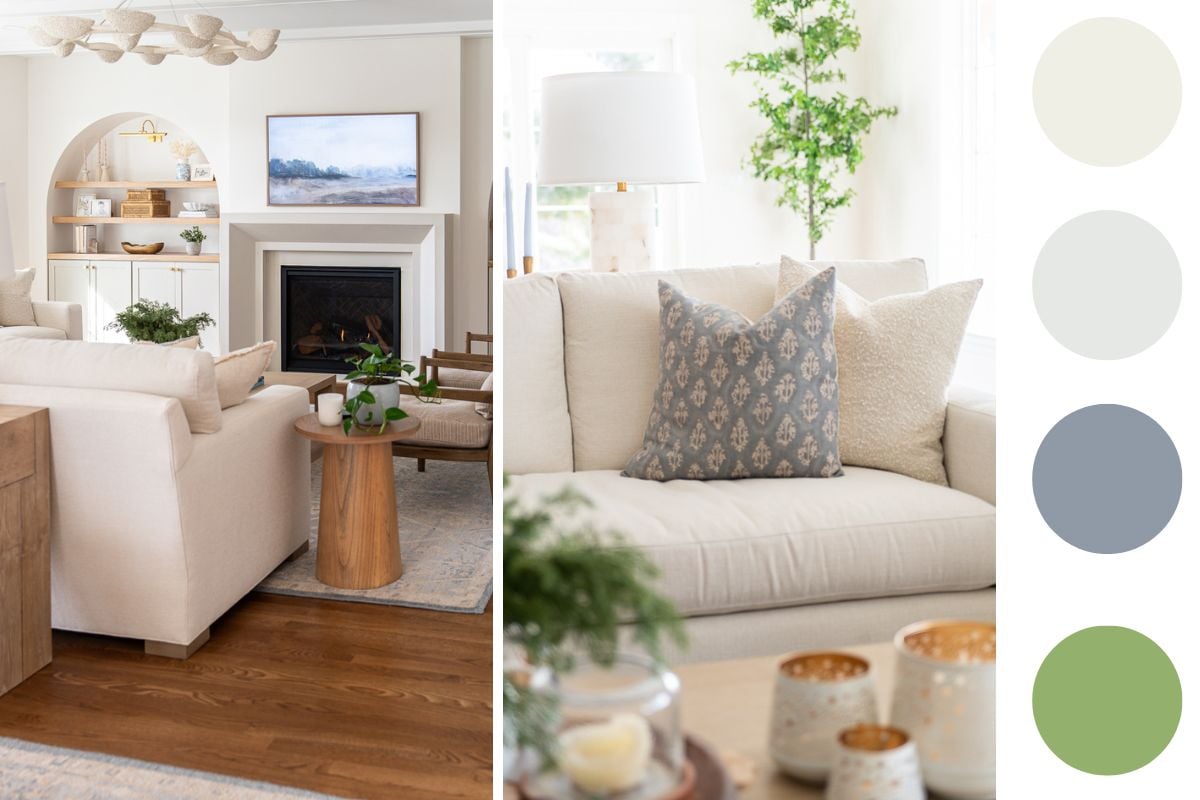
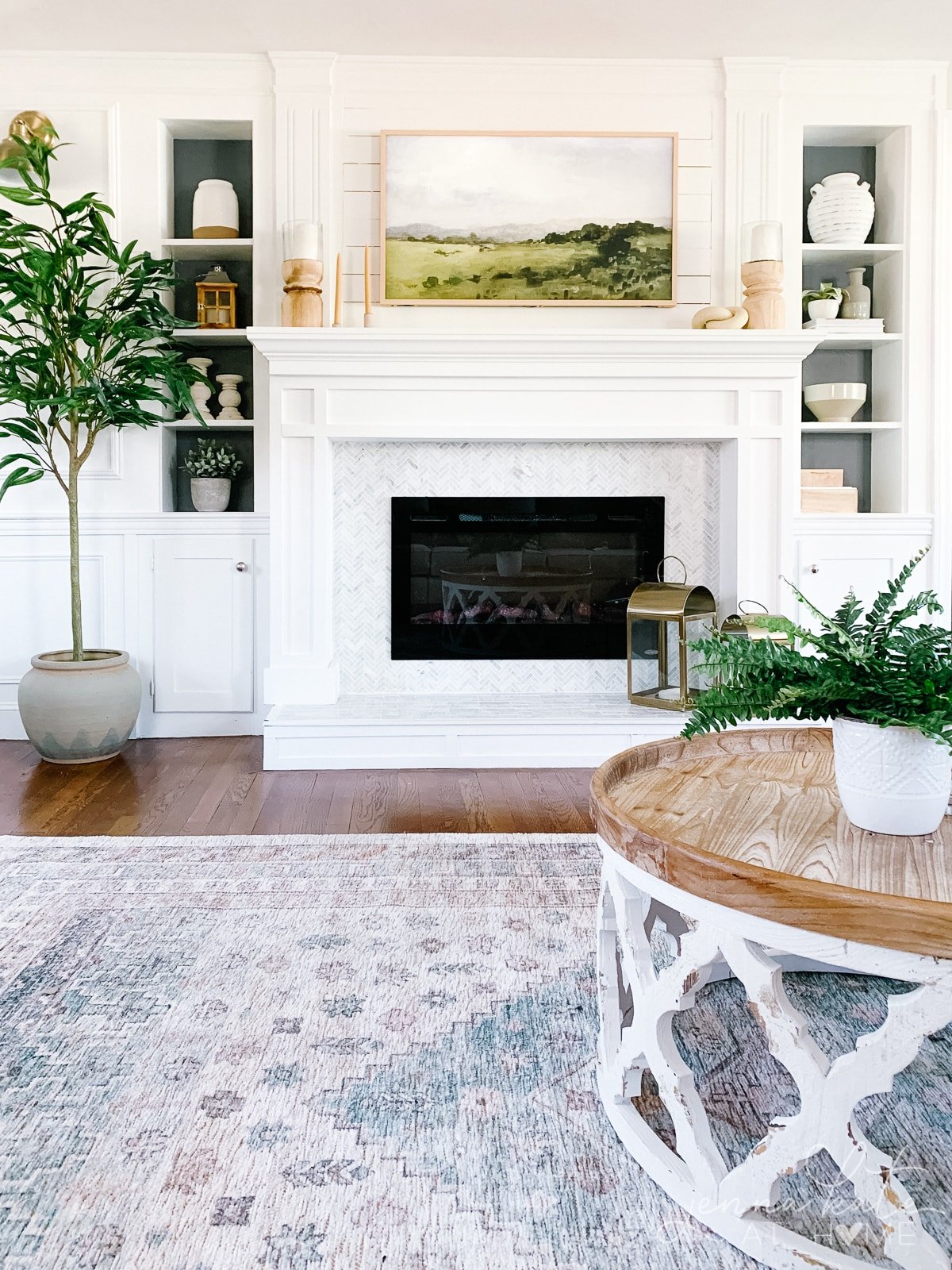
Family Room
Walls: BM White Dove
Trim: SW Pure White
Layered with soft greens, smoky blues, mixed wood tones, and brass accents, this room feels both cozy and fresh.
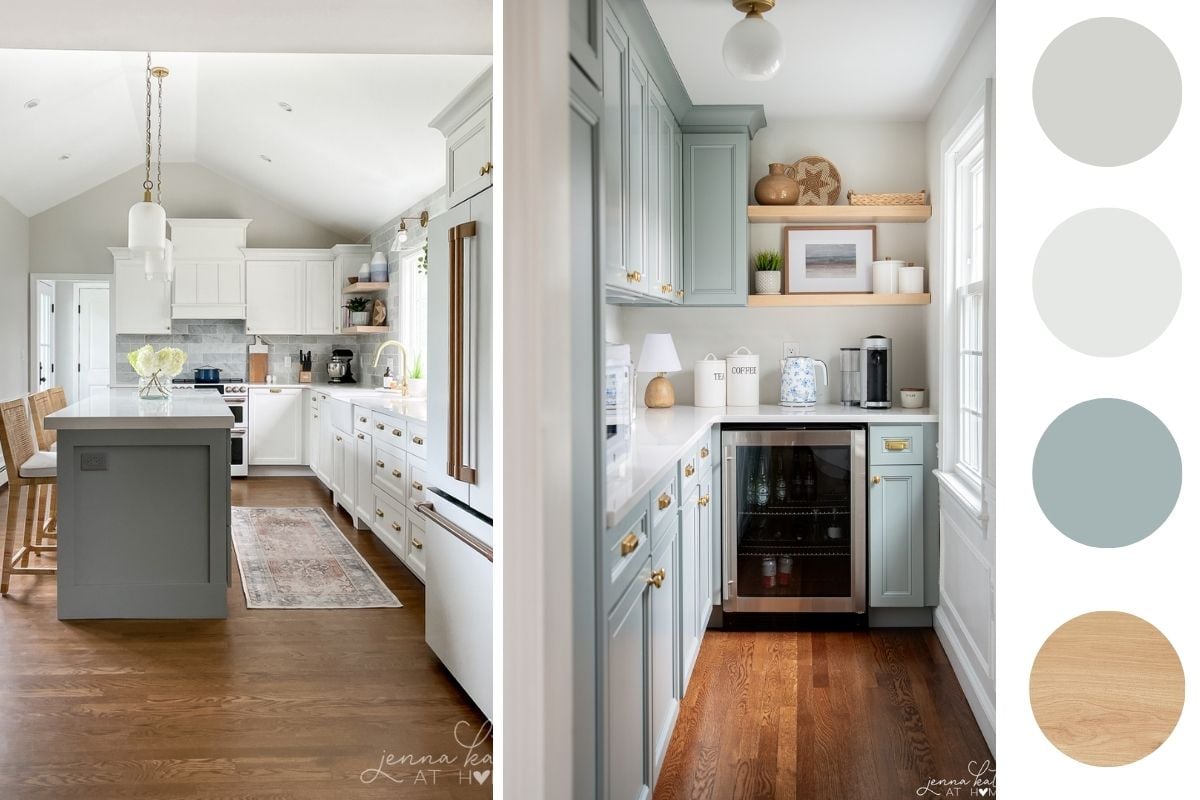
Kitchen
Walls: SW Repose Gray (50% lighter)
Cabinetry: BM Simply White & BM Boothbay Gray
This space balances warm wood floors and brass hardware with cool gray-blues to create a calm, clean look.
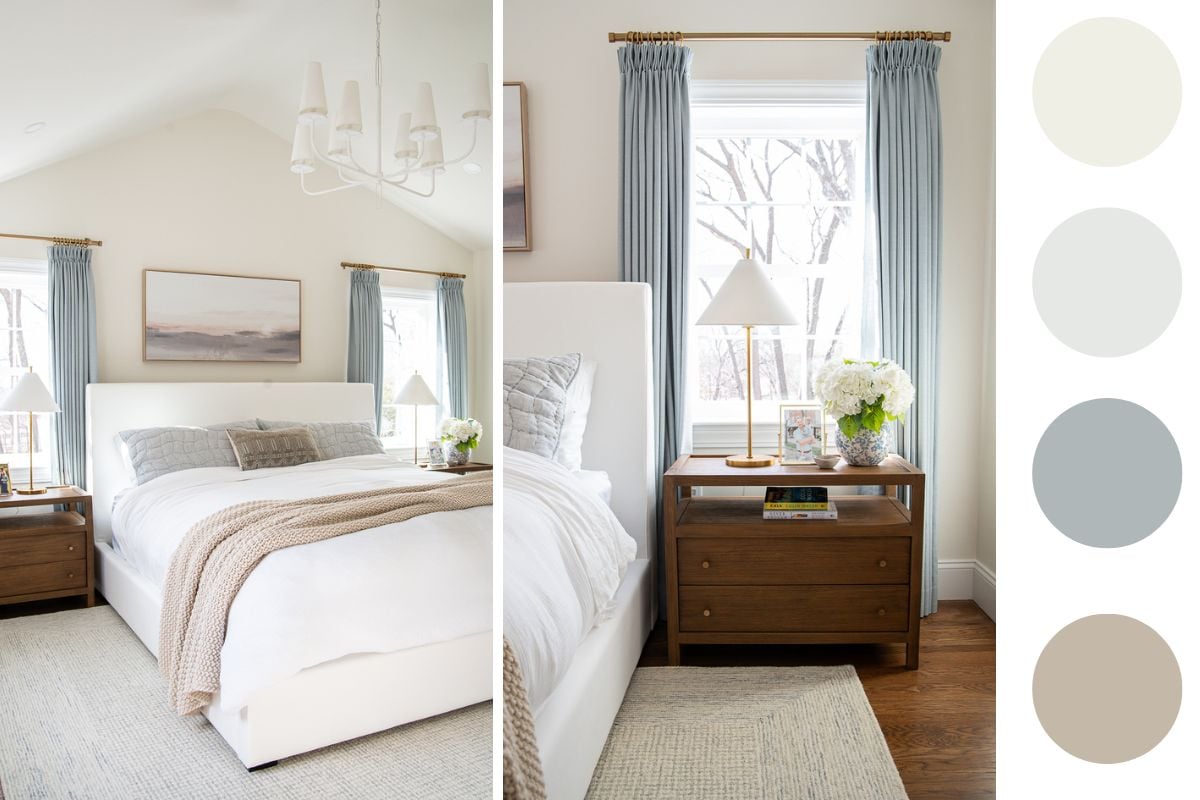
Primary Bedroom
Walls: BM Swiss Coffee
Trim: SW Pure White
Paired with soft white bedding, natural textures, and dusty blue drapes for a serene and airy retreat.
My 5 Year Old Son’s Bedroom
Walls: SW Pure White
Trim: SW Pure White
This room is slightly more vibrant, but still fits the whole home palette with soft whites, warm wood, and layers of blue in the bedding, wallpaper and art.

As you can see, I didn’t rely on just one wall color to create a cohesive home. Instead, I built a palette of complementary tones with similar warmth and softness—and repeated those hues through walls, trim, furnishings, and accents.
Each room feels distinct but still connected through color, texture, and tone.
Sample Whole House Color Palettes to Inspire You
Not sure where to start? These curated palettes are perfect jumping-off points based on different design styles.
Modern Coastal Color Palette

Colors included:
- Walls: SW Alabaster, SW Accessible Beige, SW Drift of Mist and SW Incredible White
- Trim: SW Pure White
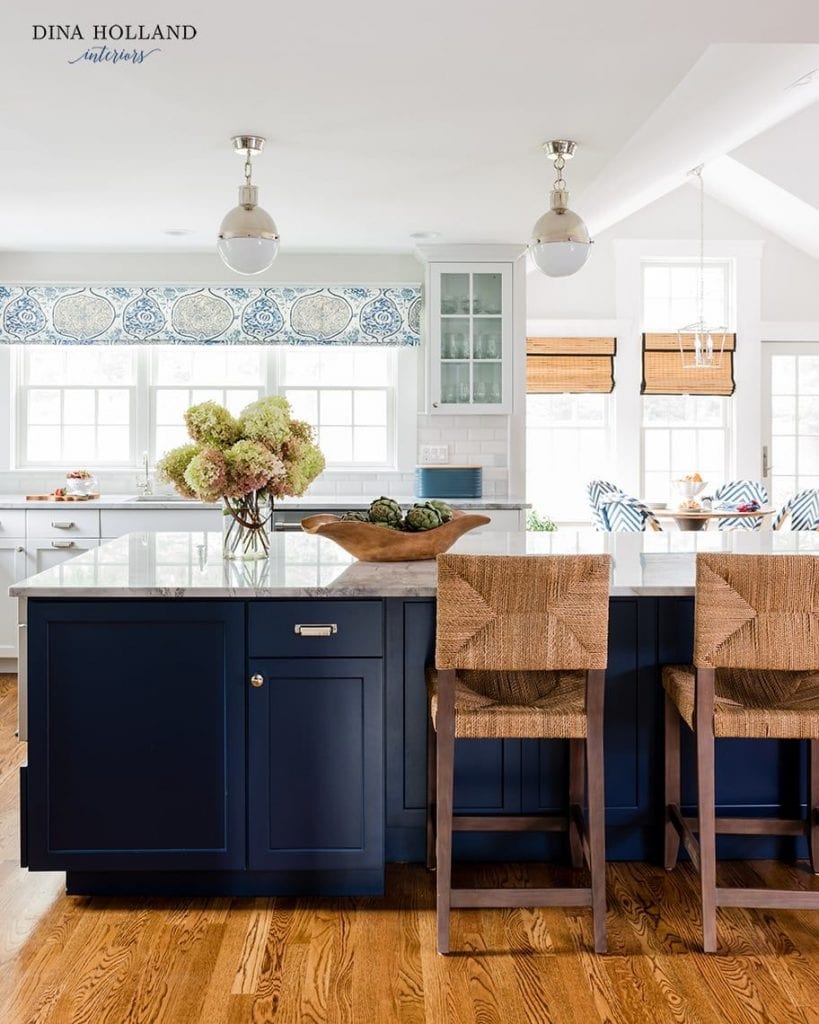
- Cabinet/Island: SW Needlepoint Navy
- Accent Color: BM Powder Blue
- Supporting Color: SW Sea Salt
This palette is light and breezy with just enough contrast. Warm neutrals like Alabaster and Accessible Beige keep the look cozy, while soft greens and blues add a subtle coastal touch.
Warm and Earthy Color Palette
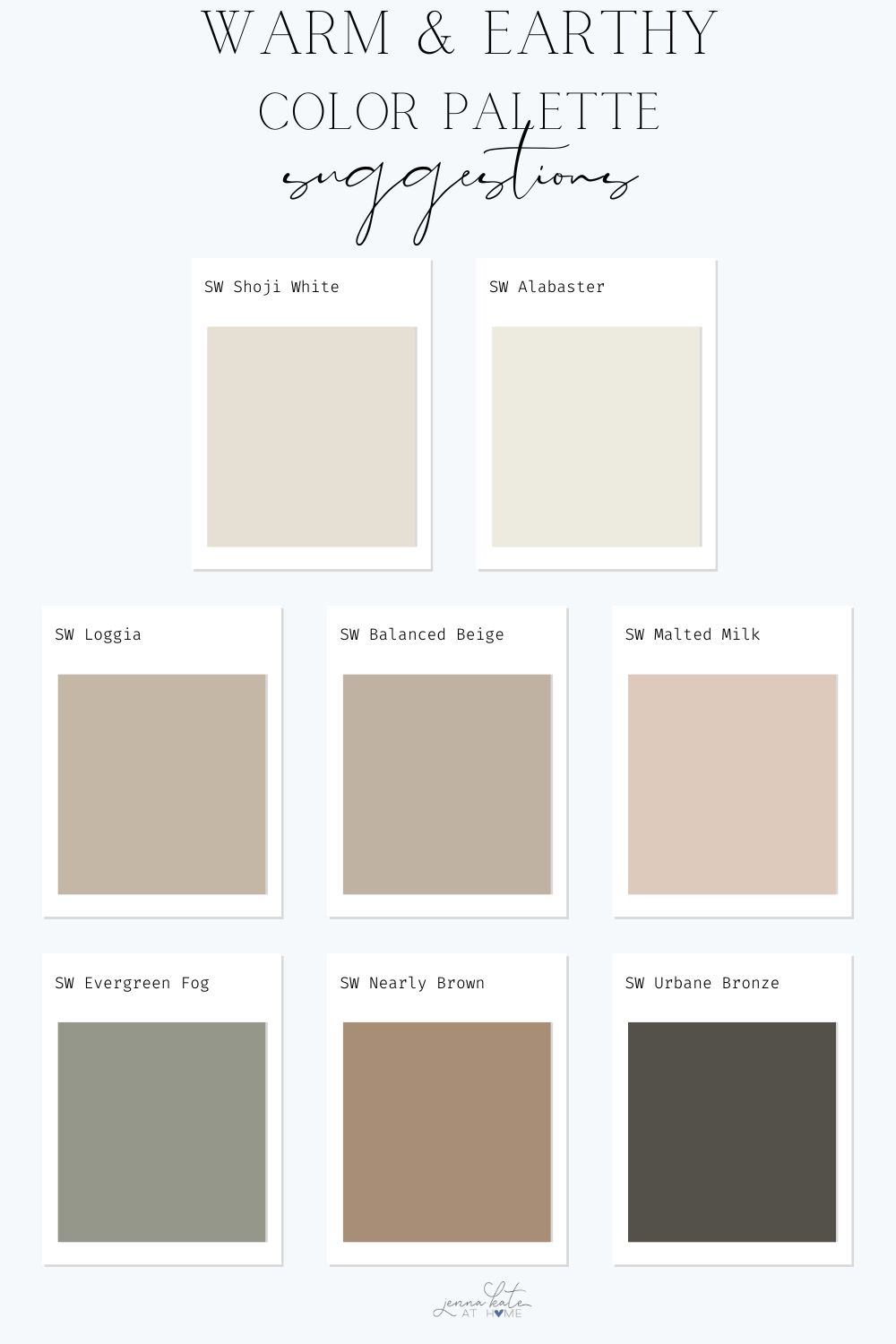
Colors included:
- Walls: SW Shoji White, SW Loggia, SW Balanced Beige, SW Malted Milk
- Trim: SW Alabaster
- Cabinet/Island: SW Urbane Bronze
- Accent Color: SW Nearly Brown
- Supporting Neutral: SW Evergreen Fog
Perfect for homes with lots of natural materials, this palette brings warmth and depth without feeling heavy. Shoji White and Alabaster balance out the richness of Urbane Bronze and Loggia.
Modern High Contrast Color Palette
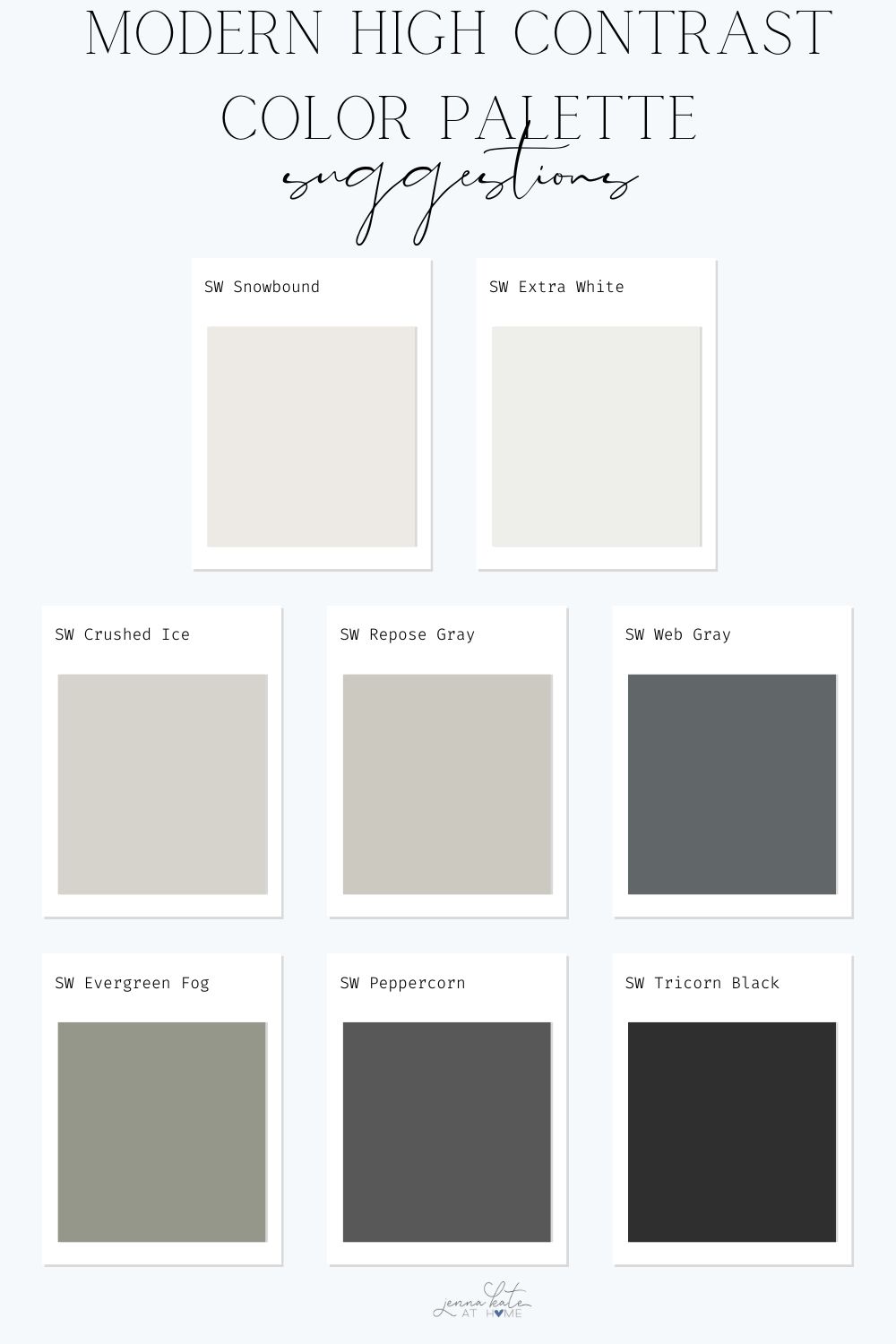
Colors included:
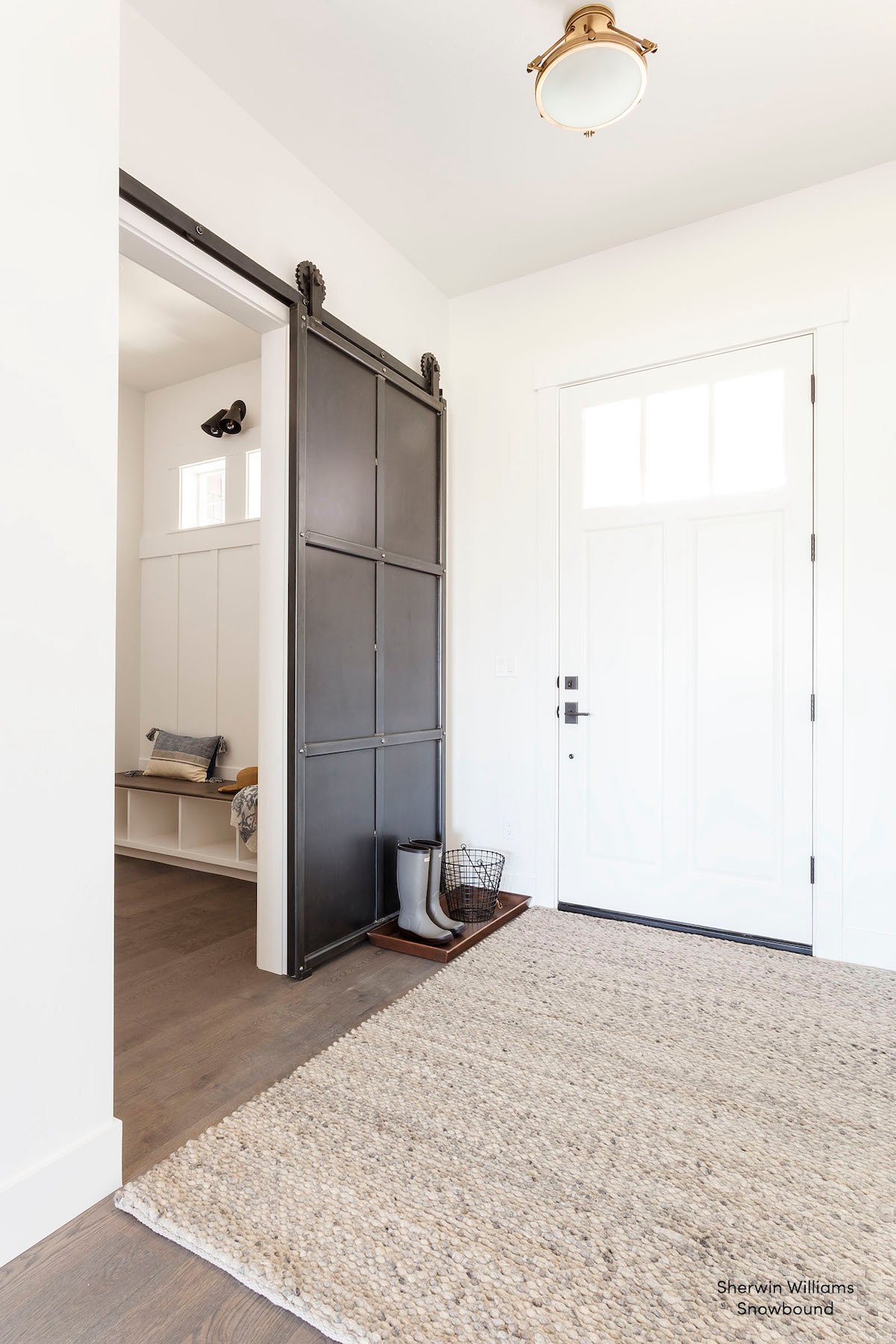
- Walls: SW Snowbound or SW Crushed Ice, SW Repose Gray
- Trim: SW Extra White
- Interior Doors: SW Tricorn Black
- Cabinets/Island: SW Peppercorn
- Accent Color: SW Evergreen Fog or SW Web Gray
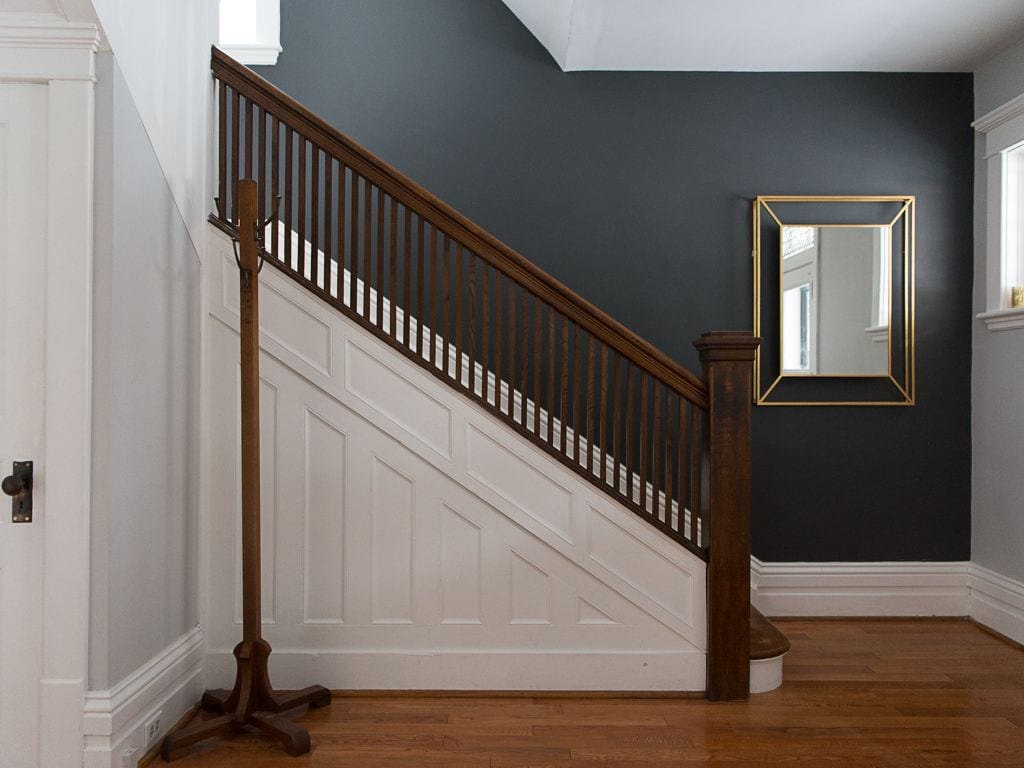
If you love clean lines and bold contrast, this palette brings drama in a refined, livable way. Crisp whites and soft grays keep things from feeling too stark, while black and green tones add depth and edge.
How to Transition Between Colors Room to Room
You don’t need to use the same color in every room—but you do want the colors to work together. Some easy ways to keep transitions feeling intentional:
- Use the same trim and ceiling color throughout the home
- Let one color be a wall color in one room and an accent in another
- Stick to a consistent undertone family (warm, cool, or neutral)
- Use architectural features (doorways, beams, arches) as natural color break points
When It’s Okay to Break the Palette
Color rules are helpful—but there’s no laws!
It’s okay to:
- Add a bold wallpaper in a powder room
- Let kids’ rooms reflect their personalities
- Use a deeper color in a cozy den
Just make sure your main living spaces feel cohesive—the rest can be the “fun chapters” in your home’s color story.
Tips for Pulling It All Together
- Use matte or eggshell sheens for soft, livable walls
- Repeat your contrast color in small doses (doors, accessories, etc.)
- Layer in natural textures to warm up neutrals
- Always sample paint in your actual lighting at different times of day
- If you’re stuck, start with a rug, fabric, or piece of art you love
When Not to Use a Color
Even popular shades like Iron Ore or Sea Salt have their limits. Avoid colors that:
- Clash with fixed finishes (flooring, counters, tile)
- Feel too dark in windowless rooms
- Look good online but pull the wrong undertone in your space
- Don’t repeat elsewhere in your palette
Final Thoughts
A whole house color palette isn’t about picking six random paint colors. It’s about crafting a story through color, texture, and tone. Start with what you already love, lean into your home’s natural undertones, and let your palette evolve over time.
Still not sure where to start? Use one of the sample palettes above as a jumping-off point – or take a peek around your home and build from what’s already working.
And if you try any of these ideas, tag me on Instagram @jennakateathome – I’d love to see how you bring your palette to life.

I sure need help!
I love the neutral gray colors. I ordered a new couch that has gray fabric. It will go into the family room. My home is not open concept. You can see the kitchen from the family room. I want to paint the whole house in that repose gray. But ( there’s always a but) my kitchen cupboards are a dark brown golden oak color . Right now the paint color is what I call a coffee with lots of cream. The granite has creams, black, rust, and some gray. Do you think repose gray would go? Sure wish i could have you over!
Try a sample and see how it looks….but my initial guess is yes, it should work! Repose Gray has warm undertones that may it work really well with other warmer colors like browns, creams and warm woods.
Hello,
Our new home is being built by a builder and they have a limited palette of stains and paints for the cabinets. The white they have is not very warm and it is in a matte finish, which I don’t really love. I am trying to stay with a classic look. If I pick a light greige paint for the cabinets with a darker stain for the island, do you think it’s too trendy? I see lots of black, white and brass finish kitchens right now that will probably be dated in a few years. Having a hard time with the colors. When I see the models with their matte finish white, it looks like a cool white, even though its not a white white. Can I warm them up with a coat of sheen clear acrylic later? Thanks for your thoughts. Trying to stay with a classic look with subway tile and a stone or quartz counter.
I wouldn’t buy too much into trends. Think about what you love! I think a light greige is beautiful and works with a lot of finishes. While brass might seem trendy now, it’s actually very classic. Some of the other finishes, for example, matte black might not be as classic in the long run. I’m not sure why the builders would have a matte finish paint for cabinets, as usually they will need some sort of sheen to be more durable/wipeable. With that being said, white is certainly a classic so if you’re on the fence, I would go with that option. Cabinet hardware is easy to switch down the road so just do what you want and like right now. I can’t speak to putting anything over your cabinets at a later point. Personally, I wouldn’t start adding anything over professionally sprayed cabinets.
When putting items on wall should you have a theme for each room? Example — Western (Cowboy – horses) — Traditional art pieces and I was hoping to do country french in the kitchen. What are your thoughts is this too much?
There’s definitely no rule! I like to have a variety and I would avoid being over-themey but it’s your home so do what makes you happy!
When I see you’re blog I got the inspiration of choosing the colour I am planning to paint my new house so I will definitely use your color structure.
I have a very interesting design conundrum. The home we just purchased (an old, hand built farmhouse) has 4 brick walls in the living room. Like as in EVERY 20 ft wall is solid brick. ???? The fireplace wall is a different type of brick too. I’m planning on doing a faded white paint on three walls that are currently red brick. Does my color scheme for the whole house need to compliment the brick? Or should I do my own thing since I’ll be whitening the majority of it?!
Hi Kelly! Great question! For decorating colors (like throw pillows, accessories etc.) you can pretty much do whatever you want and not have to worry about the brick. If you are painting walls or picking flooring, you will want to complement the brick. Now, if you’re painting it solid white, that’s pretty easy. But if you’re doing a whitewash and the red is still coming through a bit, you will want to either complement it (stick to warm colors) or contrast with it (think opposite side of the color wheel). If you really want to start from scratch and not worry about the red undertones, I would definitely paint them opaque!
Thank you! We will probably whitewash the brick. So I will look for complimentary or contrasting colors. Thanks for the guidance!!!
I am excited to learn about choosing colors. We are having a home built and I have been stressing over the colors I should choose. I am hoping to gain insight on creating a home I will love.